








What's Happening?
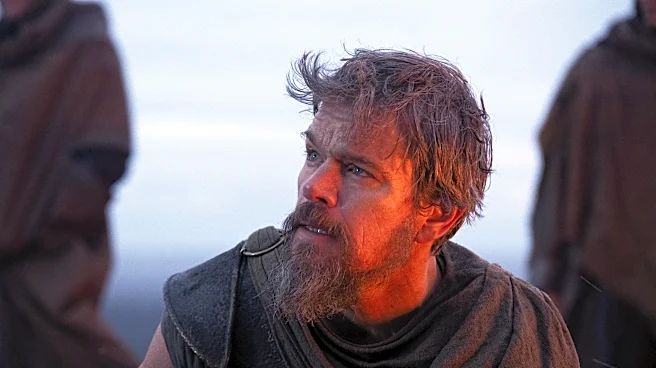
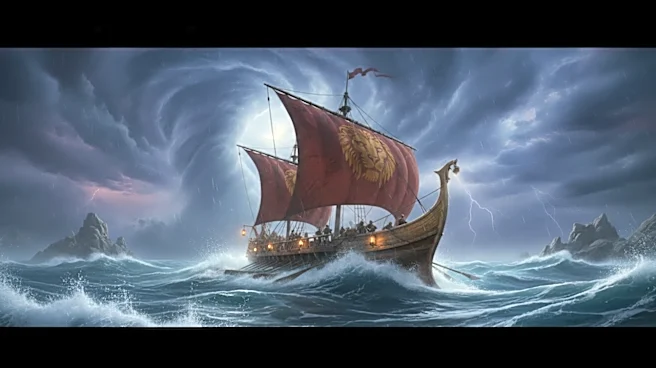
Christopher Nolan's latest film, 'The Odyssey,' is set to premiere as a groundbreaking cinematic experience, being the first major motion picture shot entirely with IMAX cameras using Kodak 65mm motion picture film. This film, based on Homer's epic poem,
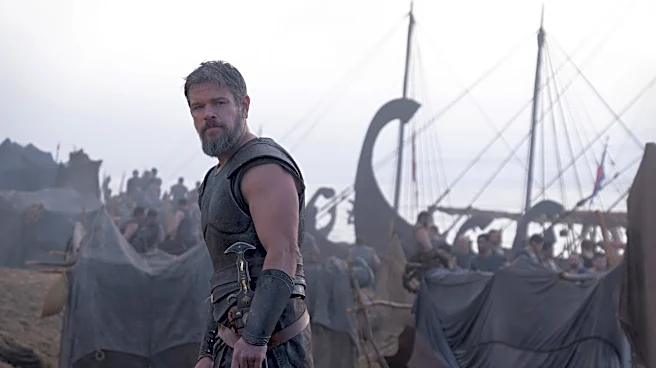
follows the journey of Greek king Odysseus as he attempts to return home after the Trojan War. The production spanned 91 days across six countries and utilized over 2 million feet of Kodak celluloid. The film features an all-star cast including Matt Damon, Anne Hathaway, Zendaya, and Tom Holland. Nolan, known for his preference for film over digital, has previously used Kodak film for his Oscar-winning movie 'Oppenheimer.' 'The Odyssey' will be shown in various formats, including 70mm IMAX, 35mm, and 2D, with special screenings in Rochester, New York, where the Kodak film was produced.
Why It's Important?
The release of 'The Odyssey' marks a significant moment in the film industry, highlighting a resurgence in the use of traditional film in an era dominated by digital technology. Nolan's choice to use Kodak film underscores a commitment to preserving the art of filmmaking and offers audiences a unique visual experience that digital formats may not replicate. This decision also supports the film industry in Rochester, New York, where Kodak continues to produce film stock, contributing to local economic activity. The film's anticipated success could influence other filmmakers to consider traditional film for future projects, potentially revitalizing the market for film stock and impacting the broader cinematic landscape.
What's Next?
As 'The Odyssey' hits theaters, its performance at the box office and reception by audiences and critics will be closely watched. The film is already generating Oscar buzz, with some critics predicting it as a strong contender for Best Picture at the 2027 Oscars. The success of 'The Odyssey' could lead to increased demand for film stock, encouraging more filmmakers to explore traditional film techniques. Additionally, the film's impact on the industry may prompt discussions about the future of filmmaking and the balance between digital and traditional methods.