







What's Happening?
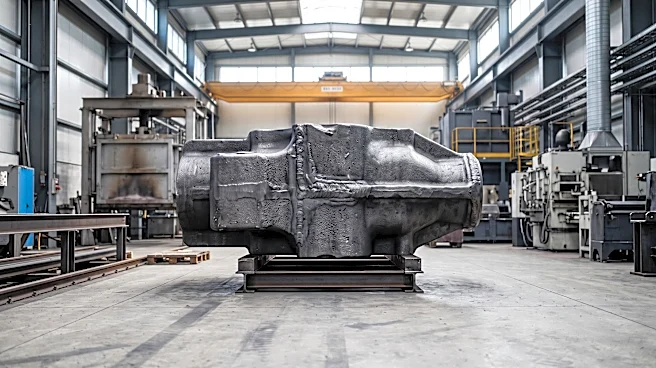
Hadrian, a manufacturing startup, has acquired Kutztown Foundry & Machine, a company with over 150 years of operation, to produce naval-grade steel castings and forgings for submarines. Hadrian plans to invest $300 million in upgrades to expand the facility.
This acquisition comes at a time when the U.S. is experiencing a steel shortage, which is impacting defense contractors and their ability to produce weapons like Tomahawks and Patriots. Senator Tommy Tuberville, R-Ala., highlighted this issue during a recent confirmation hearing, noting that defense contractors in his state are struggling to obtain steel for upgrades and new builds. Hadrian's strategy involves integrating its AI-for-factories software, Opus, into Kutztown's operations to enhance efficiency, although fully robotic integration into legacy equipment presents challenges.
Why It's Important?
This acquisition and investment are crucial for strengthening the U.S. defense industrial base, particularly in the production of critical components for naval vessels. The current steel shortage poses a significant threat to national security by hindering the manufacturing of essential weapons systems. By increasing domestic production of naval-grade steel, Hadrian aims to mitigate supply chain vulnerabilities and ensure the timely delivery of defense assets. The integration of AI and automation into the foundry's operations could also set a precedent for modernizing traditional manufacturing sectors, improving efficiency, and reducing reliance on external suppliers. This move directly addresses a critical bottleneck identified by lawmakers and defense contractors, impacting the readiness and capabilities of the U.S. military.
What's Next?
Hadrian plans to rapidly integrate its AI software, Opus, into Kutztown's operations, focusing on key areas between now and January. The $300 million expansion will involve designing and constructing new, greenfield parts that will be fully integrated with the existing Kutztown building and Hadrian's other factories. While full robotic builds may not be feasible for upgrading legacy equipment, the new sections will incorporate advanced automation and AI from the start. The goal is to make the foundry a direct supplier to end customers and other Hadrian factories. This initiative will be closely watched as a model for how technology can revitalize and secure critical manufacturing capabilities within the U.S. defense sector.
Beyond the Headlines
The acquisition of Kutztown Foundry by Hadrian highlights a broader national imperative to reshore and modernize critical manufacturing capabilities. The steel shortage is not merely an economic inconvenience but a strategic vulnerability that impacts national defense. This development underscores the importance of a robust domestic industrial base for national security, moving beyond just assembling components to producing foundational materials. The integration of AI into a traditional industry like steel casting also represents a significant step towards Industry 4.0, demonstrating how advanced technologies can enhance efficiency and resilience in legacy sectors. This could inspire similar initiatives across other critical industries, fostering a more secure and self-reliant U.S. manufacturing ecosystem. The ethical implications of AI in manufacturing, such as job displacement versus creation, will also be a long-term consideration.