





What's Happening?
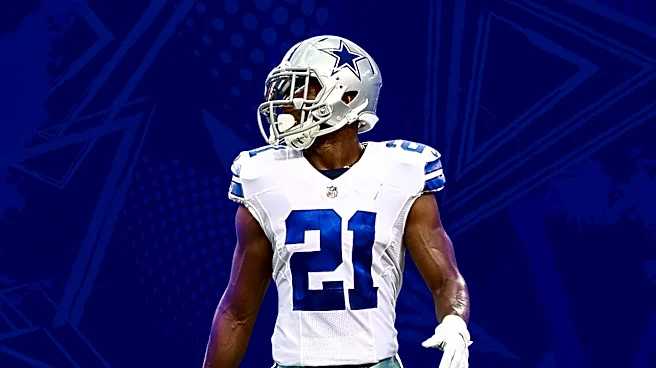
Ezekiel Elliott, a prominent running back for the Dallas Cowboys, engaged in a significant contract holdout in 2019. This holdout lasted 40 days, encompassing the entire training camp and preseason. Elliott's decision to withhold his services was a strategic
move to secure a more lucrative contract. The standoff concluded when the Dallas Cowboys agreed to a market-resetting extension, highlighting Elliott's influence and value to the team. This event is part of a broader trend in the NFL where players leverage holdouts to negotiate better terms, often resulting in substantial changes to team rosters and player contracts.
Why It's Important?
Elliott's holdout and subsequent contract extension underscore the evolving dynamics of player negotiations in the NFL. Such holdouts can significantly impact team strategies, financial planning, and player morale. For the Cowboys, securing Elliott was crucial given his performance and contribution to the team's offense. This event also set a precedent for future negotiations, influencing how teams and players approach contract discussions. The financial implications extend beyond the Cowboys, affecting salary cap considerations and market expectations for running backs across the league.
What's Next?
While Elliott's contract situation was resolved, it highlights the potential for similar standoffs in the future as players seek to maximize their earnings and teams strive to balance financial constraints with competitive performance. The NFL may see more players adopting this strategy, prompting teams to reassess their negotiation tactics and contract structures. Additionally, the league might consider policy adjustments to address the growing trend of player holdouts.