



What's Happening?
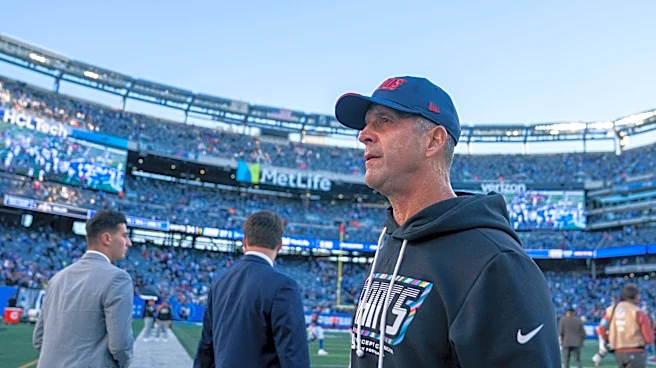
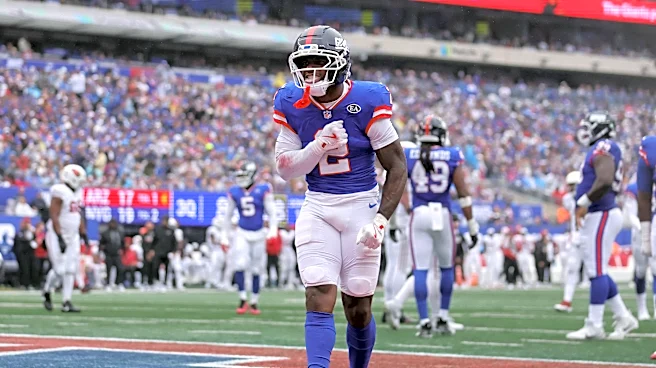
The New York Giants, under new head coach John Harbaugh, have implemented a culture emphasizing accountability and direct communication, a significant shift from the previous coaching style of Brian Daboll. This approach involves coaches openly addressing
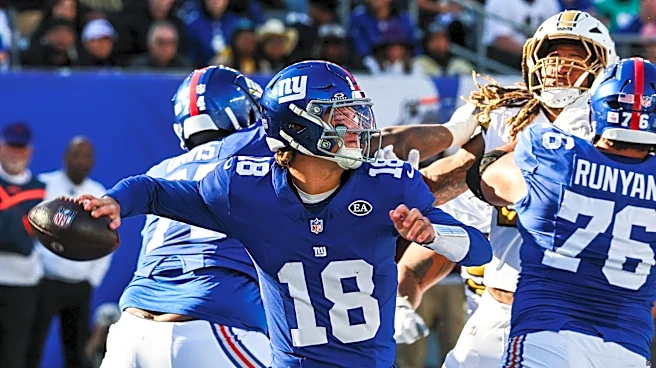
individual mistakes during team meetings, rather than letting issues fester. Defensive coordinator Dennard Wilson, for instance, publicly called out players for lack of effort in a recent loss. Harbaugh is also willing to make lineup changes, including benching players regardless of their salary or veteran status, if it benefits the team's chances of winning. This was evident in the decision to start J.J. McCarthy at quarterback over Jameis Winston. The Giants are currently 4-2-1 and lead the NFC East, a notable improvement from their previous season's performance in close games.
Why It's Important?
This cultural shift under John Harbaugh is crucial for the New York Giants, as it aims to instill a higher level of discipline and performance. The emphasis on direct accountability and communication is intended to foster an environment where players are constantly striving for improvement and understand the consequences of their actions. This contrasts with the previous regime, where a perceived lack of accountability was a shortcoming. The early success of the Giants, particularly their improved record in close games, suggests that Harbaugh's methods are resonating with the team. This approach could lead to sustained success for the franchise, as it builds trust and ensures that all members are aligned with the team's objectives. For the broader NFL, the Giants' turnaround under Harbaugh could serve as a case study for the impact of coaching philosophy on team culture and performance, especially in situations where a team has underperformed in previous seasons.
What's Next?
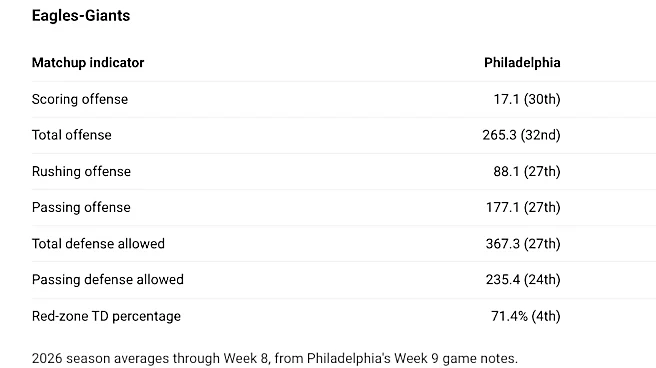
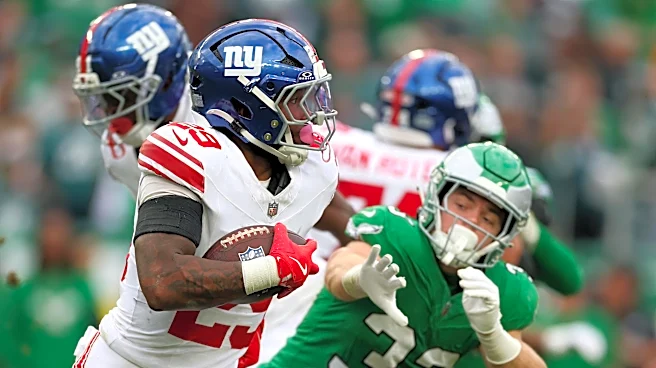
The New York Giants will continue to apply John Harbaugh's philosophy of accountability and communication as they progress through the season, particularly as they face a crucial rivalry game against the Philadelphia Eagles. The team's ability to maintain their current level of performance and adapt to challenges, such as injuries to key players like quarterback Jaxson Dart, will be a test of this new culture. The trade deadline also presents an opportunity for the Giants to further strengthen their roster, with Harbaugh indicating the team is open to making calls. The ongoing development of quarterback J.J. McCarthy and the team's overall offensive and defensive schemes will be critical. If the Giants can sustain their success and make a deep playoff run, it will further validate Harbaugh's coaching approach and solidify the team's new identity.
Beyond the Headlines
The shift in coaching philosophy within the New York Giants under John Harbaugh extends beyond mere on-field tactics; it delves into the psychological and sociological aspects of team management. The explicit focus on confronting mistakes publicly, while potentially uncomfortable, aims to create a transparent environment where issues are addressed directly and collectively. This can build a stronger sense of shared responsibility and trust among players and coaches. The contrast with Brian Daboll's previous approach, which reportedly focused only on positive plays after losses, highlights different leadership styles and their potential impact on team morale and performance. Harbaugh's method, rooted in his track record of success, suggests that a demanding yet transparent leadership can be highly effective in professional sports. This approach could also influence how players perceive their roles and responsibilities, fostering a more resilient and adaptable team capable of overcoming adversity and maintaining focus on collective goals.