






What's Happening?
The market for AI interior design tools is rapidly expanding, with various applications offering features to assist users in designing interiors. Tools like Spacely AI, Planner 5D AI Studio, DecorAI, and House AI provide diverse functionalities, from
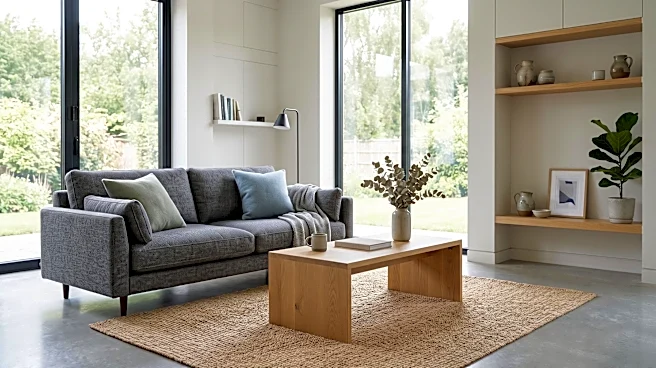
generating renders from CAD files for professionals to enabling users to visualize redesigns of their rooms in different styles. DecorAI, for instance, allows users to upload a photo and see up to four photorealistic variations, while House AI offers a range of tools to redesign interiors, exteriors, and gardens from a single photo, emphasizing photorealistic results. The global AI interior design market, valued at $3.3 billion in 2025, is projected to reach $15.0 billion by 2033, indicating significant growth and competition among these platforms. Many of these tools are designed to preserve existing room geometry, such as walls, doors, and windows, while allowing for changes in furniture and decor, making them suitable for renters who cannot make structural alterations.
Why It's Important?
The proliferation of AI interior design tools signifies a major shift in how consumers approach home decoration and renovation. These tools democratize interior design, making professional-grade visualization accessible to a broader audience, including first-time renters and homeowners on a budget. The ability to visualize changes before making purchases can significantly reduce the high cart abandonment rates often seen in furniture and home goods, which currently stand at 78.65%. By connecting generated designs to real, purchasable products from various retailers, some apps are streamlining the shopping process, potentially boosting sales for furniture companies and online marketplaces. This trend also empowers consumers to experiment with different styles and make informed decisions, leading to more personalized and satisfying living spaces. The focus on preserving existing structures also addresses the specific needs of renters, allowing them to refresh their spaces without violating lease agreements.
What's Next?
The AI interior design market is expected to continue its rapid expansion, with more apps likely to emerge, offering increasingly sophisticated features. Future developments may include enhanced integration with augmented reality (AR) for more immersive previews, more precise product matching with real-time inventory and pricing, and advanced AI capabilities for understanding user preferences and generating highly personalized design recommendations. The competition among these platforms will likely drive innovation in areas such as photorealism, ease of use, and the breadth of design styles and spaces covered. As the market matures, there may also be a greater emphasis on ethical AI practices, ensuring that designs are inclusive and cater to diverse user needs without perpetuating biases. The growth of this sector could also lead to new business models, such as subscription services offering unlimited designs or concierge services for product sourcing and ordering.
Beyond the Headlines
Beyond the immediate convenience, the rise of AI interior design tools has deeper implications for consumer behavior and the design industry. These tools are fostering a culture of visual experimentation and instant gratification in home decor, potentially influencing design trends and accelerating their adoption. The ability to quickly iterate on design ideas might reduce reliance on traditional interior designers for basic projects, shifting their role towards more complex or bespoke commissions. Furthermore, the data collected by these AI platforms on user preferences and popular styles could provide invaluable insights for manufacturers and retailers, allowing them to tailor product offerings more effectively. There are also ethical considerations regarding data privacy and the potential for these tools to create a homogenized aesthetic if not designed with sufficient diversity and customization options. The long-term impact could be a more dynamic and accessible design landscape, where technology empowers individuals to shape their environments with unprecedented ease.