









What's Happening?
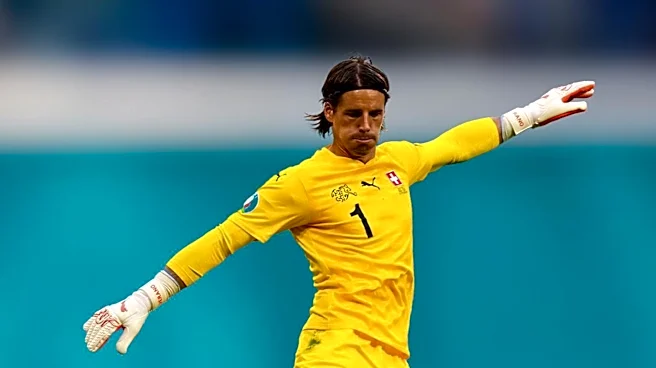
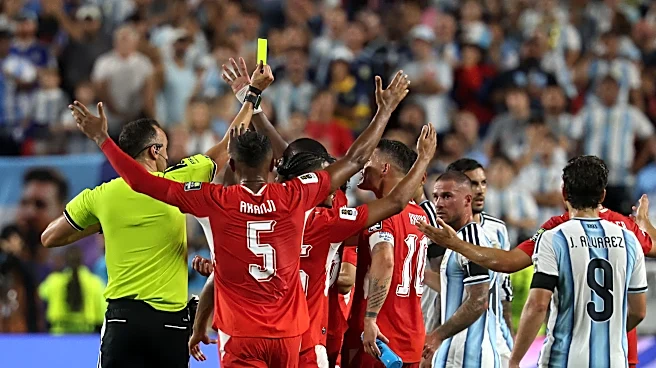
During a World Cup quarter-final match between Argentina and Switzerland, Swiss forward Breel Embolo was ejected after receiving a second yellow card for simulation. The incident occurred when Embolo was deemed to have dived during a challenge with Argentina's
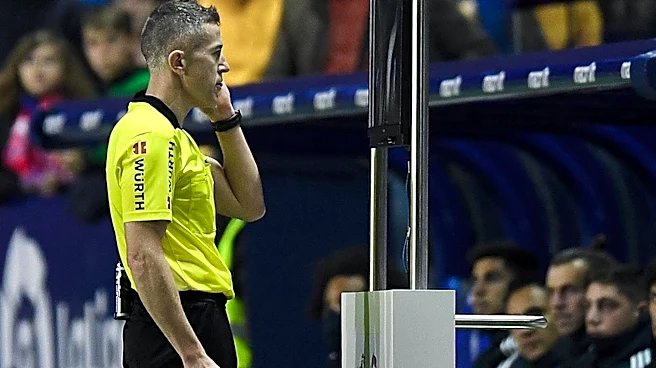
Leandro Paredes. Initially, Paredes was issued a yellow card, but a VAR review reversed the decision, attributing the offense to Embolo. This decision left Switzerland with ten players for the remainder of the match, which Argentina eventually won. The use of VAR for 'mistaken identity' in this context has sparked debate and criticism.
Why It's Important?
The VAR decision in the Argentina-Switzerland match underscores the ongoing controversies surrounding the use of technology in sports. The application of the 'mistaken identity' rule in this instance has raised questions about the consistency and fairness of VAR interventions. For Switzerland, the decision had immediate consequences, as playing with ten men likely contributed to their defeat. This incident highlights the broader implications of VAR on game outcomes and the potential for technology to influence critical moments in sports. The debate over VAR's role and its impact on the integrity of the game continues to be a significant topic in international soccer.
What's Next?
Following the controversial VAR decision, there may be calls for a review of the 'mistaken identity' rule and its application in soccer. Stakeholders, including teams, players, and governing bodies, might push for clearer guidelines to ensure fair and consistent use of technology in officiating. The incident could lead to discussions within FIFA and other soccer organizations about potential rule adjustments or clarifications. As the World Cup progresses, the scrutiny on VAR decisions is likely to intensify, with teams and fans closely watching how technology influences the tournament's outcomes.