




What's Happening?
Mark Cropper, a sixth-generation papermaker and chairman of James Cropper Paper Mill, established The Paper Foundation to preserve and advance the heritage of hand papermaking. Motivated by a desire to reconnect his mill with the local community and address
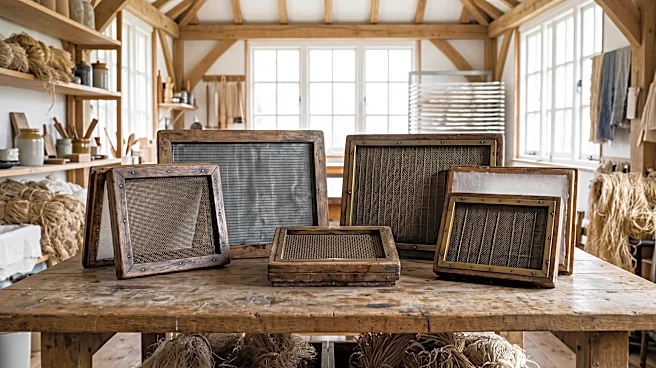
the endangered status of hand papermaking in the UK, Cropper embarked on a mission to collect historical archives, molds, and paper samples. A significant acquisition included 36 historic molds from the last Whatman Mill, a prominent name in artist-quality paper. The Foundation also focused on knowledge preservation, training apprentices like Tom Frith-Powell under the guidance of the UK's last traditional hand papermakers, Christine and Mike Gibbs. The team now hand-produces paper for prestigious institutions such as the Royal Household, the Library of Congress, the Metropolitan Museum, and the Vatican, utilizing waste textiles like discarded bed sheets and denim to create unique, imperfectly textured papers.
Why It's Important?
The Paper Foundation's efforts are crucial for safeguarding a centuries-old craft that is at risk of disappearing. By preserving historical techniques and artifacts, the Foundation ensures that the knowledge and skills of hand papermaking are passed down to future generations. This initiative not only maintains a vital part of cultural heritage but also promotes sustainable practices through the innovative use of recycled materials. The production of bespoke papers for renowned institutions highlights the enduring value and demand for high-quality, handmade products in an increasingly digital world. Furthermore, the Foundation's work contributes to a broader appreciation of paper's cultural significance, reminding us of its foundational role in art, literature, and record-keeping. This revival of craft also creates unique economic opportunities and fosters community engagement around a shared heritage.
What's Next?
The Paper Foundation plans to expand its operations by adding a printmaking studio, a book bindery, and a conservation lab. These additions will further enhance its capacity to preserve and promote paper-related crafts and research techniques. The Foundation also intends to develop patterned paper and explore new research avenues, driven by a continuous curiosity and passion for the medium. These future developments aim to create a more comprehensive center for paper craftsmanship, offering broader educational opportunities and fostering innovation within traditional methods. The continued production of specialized papers for high-profile clients will likely sustain its operations and further elevate its reputation in the craft world.
Beyond the Headlines
The work of The Paper Foundation transcends mere craft preservation; it represents a broader movement towards valuing the tangible and the handmade in an increasingly digital society. In an age dominated by screens, the Foundation champions the intimate experience of interacting with physical materials, emphasizing the 'slowness' and enjoyment inherent in craft. This initiative also subtly critiques the rapid obsolescence often associated with modern production by highlighting the longevity and unique character of handmade items. The transformation of waste textiles into high-quality paper embodies principles of circular economy and sustainable living, offering a model for how traditional crafts can adapt to contemporary environmental concerns. Ultimately, The Paper Foundation is not just making paper; it is cultivating a deeper connection to material culture, history, and sustainable practices.