








What's Happening?
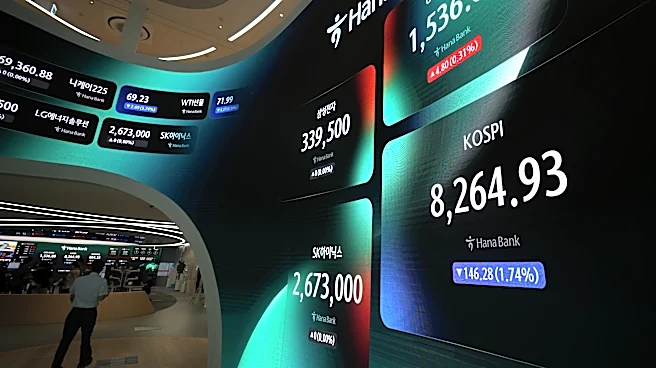
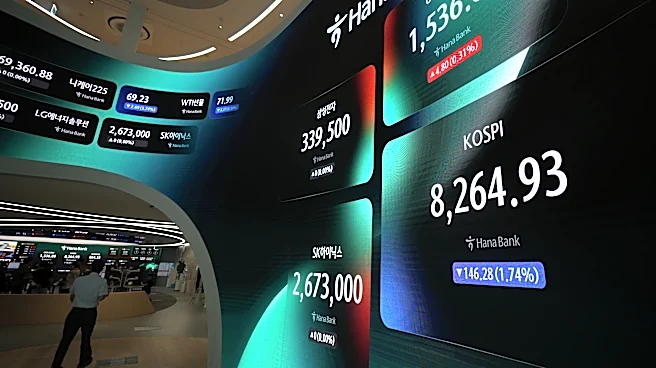
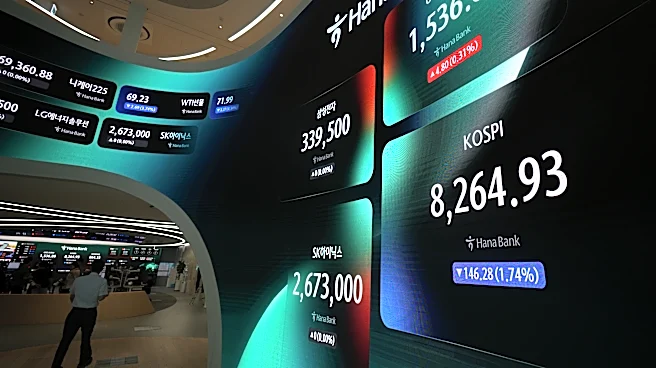
Asian stock markets experienced a decline on Thursday, primarily driven by a significant sell-off in computer chip shares. This downturn comes as U.S. futures remained relatively unchanged following modest losses on Wall Street. The South Korean Kospi
index saw a substantial drop of 5.1%, with major chipmakers like SK Hynix and Samsung Electronics experiencing losses of 7.7% and 6.4%, respectively. Similarly, Japan's Nikkei 225 fell by 1.5%, and Taiwan's Taiex decreased by 1.1%. The decline in chip stocks is attributed to concerns over a potential oversupply, despite the recent surge in demand for artificial intelligence technologies. Additionally, oil prices fell as negotiations involving the U.S., Iran, Qatar, and Pakistan raised hopes for a resolution to the ongoing conflict in Iran, potentially improving crude supply through the Strait of Hormuz.
Why It's Important?
The decline in Asian stock markets, particularly in the technology sector, highlights the volatility and uncertainty facing global markets. The sell-off in chip shares reflects investor concerns about the sustainability of the recent AI-driven tech boom, as massive investments by major tech companies may not yield immediate financial returns. This situation underscores the challenges of balancing innovation with market realities. Furthermore, the drop in oil prices, influenced by geopolitical negotiations, could have significant implications for global energy markets. A resolution to the Iran conflict and improved oil supply could stabilize prices, impacting energy-dependent industries and economies worldwide. These developments are crucial for investors and policymakers as they navigate the complexities of global economic dynamics.
What's Next?
Looking ahead, market participants will closely monitor the outcomes of the negotiations involving the U.S. and Iran, as any progress could further influence oil prices and market stability. Additionally, investors will be keenly observing the performance of tech stocks, particularly in the AI sector, to assess whether the current sell-off is a temporary correction or indicative of a longer-term trend. The response of major tech companies to these market conditions, including potential adjustments in investment strategies, will also be a focal point. As the situation evolves, stakeholders across industries will need to adapt to the shifting economic landscape, balancing innovation with prudent financial management.