

What's Happening?
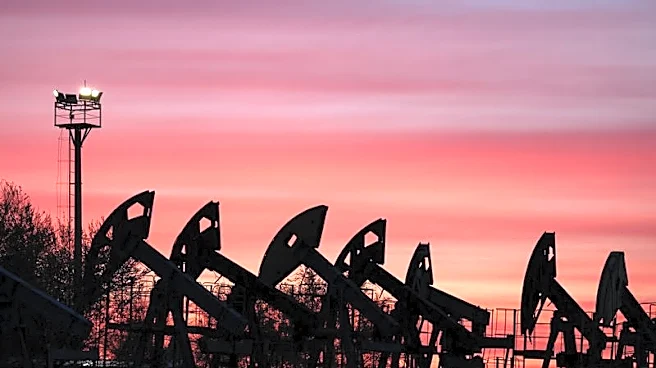
The American Petroleum Institute (API) has released an analysis highlighting the United States' role as a global energy stabilizer due to decades of investment in oil and natural gas production. The U.S. now produces nearly 14 million barrels per day,
making it the world's largest oil producer. API emphasizes that sustained domestic energy development has helped cushion global supply disruptions amid geopolitical uncertainties. The organization notes that long-term investments in infrastructure, such as pipelines and refineries, have reshaped the U.S.'s position in global energy markets.
Why It's Important?
The U.S.'s ability to stabilize global energy markets is crucial in times of geopolitical uncertainty, such as the current tensions in the Strait of Hormuz. The country's significant production capacity and infrastructure investments provide a buffer against supply disruptions, helping to maintain energy security and price stability. This role enhances the U.S.'s influence in international energy negotiations and underscores the importance of continued investment in energy infrastructure. The analysis also highlights the need for policy certainty to encourage further capital investment and ensure future energy supplies.
What's Next?
To maintain its role as a reliable energy supplier, the U.S. will need to continue investing in energy infrastructure and secure stable leasing opportunities. Policymakers may need to implement permitting reforms and expand energy infrastructure to support future growth. The ongoing geopolitical tensions and market volatility will likely prompt further discussions on energy policy and investment strategies. The U.S.'s ability to adapt to changing market conditions and geopolitical challenges will be critical in sustaining its position as a global energy leader.