




What's Happening?
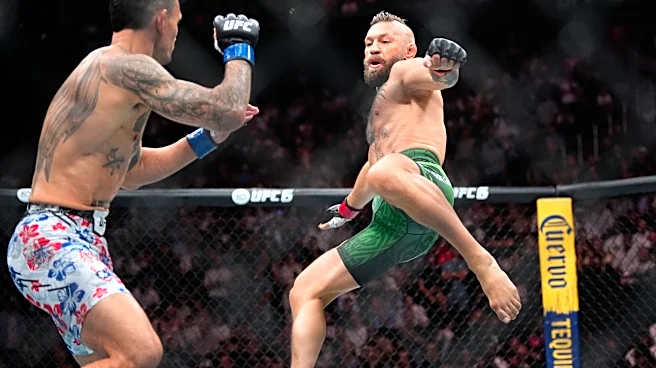
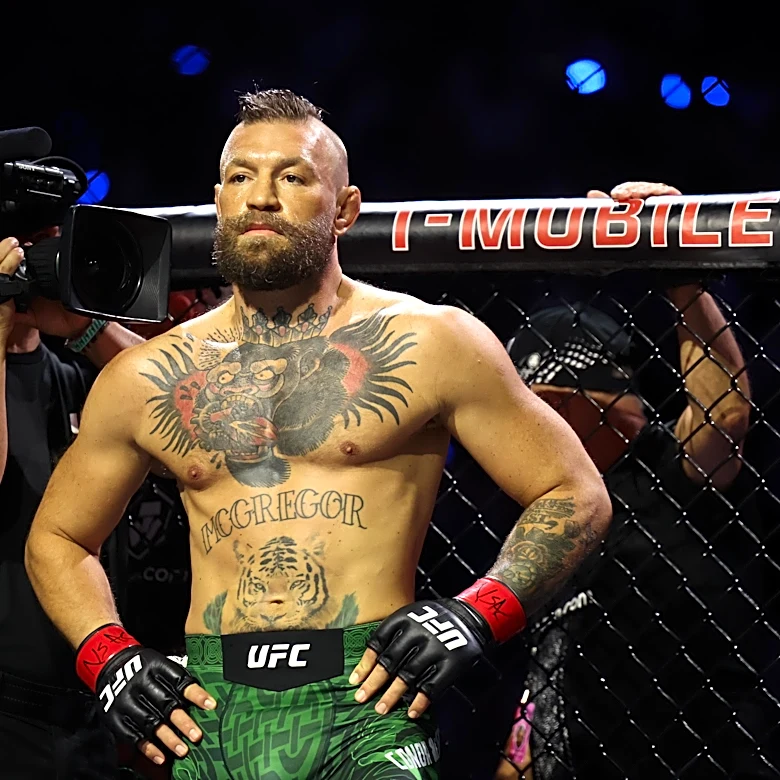
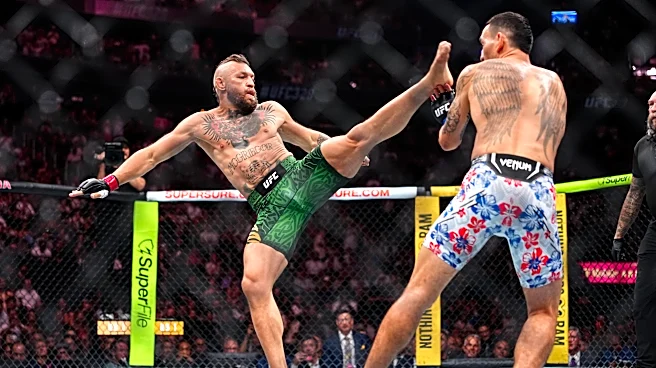
Conor McGregor, the renowned UFC fighter, has announced plans for surgery following a knee injury sustained during his recent fight against Max Holloway at UFC 329. The injury occurred just seconds into the match when McGregor's right leg buckled during an attempted
jumping roundhouse kick. Despite the setback, McGregor expressed his determination to return to martial arts practice and fulfill the final fight of his contract. His coach, John Kavanagh, noted that the kick causing the injury was a routine part of McGregor's training. UFC President Dana White speculated that McGregor might have suffered a torn ACL, although no official diagnosis has been confirmed.
Why It's Important?
McGregor's injury and subsequent plans for surgery are significant for the UFC and its stakeholders. As a major draw for the sport, McGregor's fights generate substantial revenue and viewership, impacting the financial health of the UFC and associated businesses. His potential return could reignite interest and betting activity, as seen with the record betting during his recent fight. However, the uncertainty surrounding his recovery and future performance could affect promotional strategies and scheduling for upcoming UFC events. McGregor's situation also highlights the physical risks athletes face and the importance of injury management in professional sports.
What's Next?
The next steps for McGregor involve undergoing surgery and a rehabilitation process to recover from his knee injury. The timeline for his return to the octagon remains uncertain, with UFC President Dana White noncommittal about future fight dates. McGregor's recovery will be closely monitored by fans, the UFC, and sports analysts, as his return could significantly influence the UFC's event planning and marketing strategies. Additionally, McGregor's performance post-recovery will be scrutinized to assess his competitiveness and potential to fulfill his contract obligations.