






What's Happening?
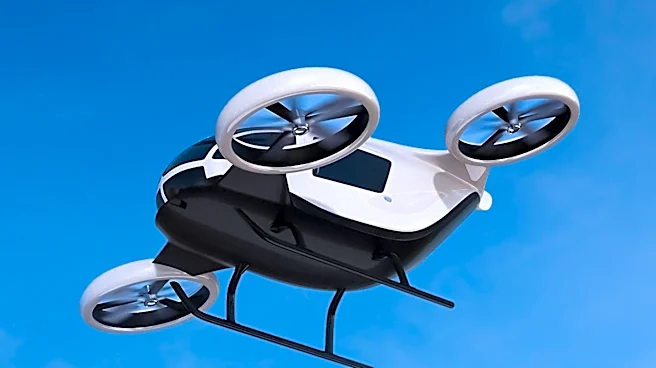
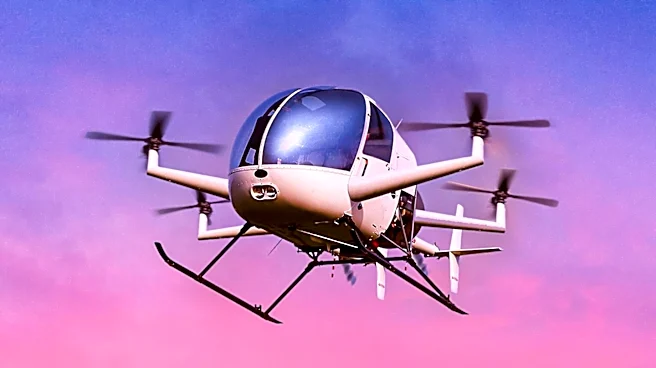
Honda's full-scale eVTOL technology demonstrator, the F1, successfully completed its first flight test on April 1, 2026, in San Luis Obispo County, California. The uncrewed, remotely piloted aircraft, weighing approximately 7,000 pounds, hovered for about
90 seconds. This milestone marks the program's entry into the full-scale validation phase, where core technologies are tested at actual aircraft size. Honda publicly disclosed this achievement in late May 2026 and later presented video footage of the eVTOL's progress at the Ninth China International Import Expo (CIIE) in November 2026. The F1 is designed as a series-hybrid aircraft, combining a gas-turbine generator and a battery to power its electric motors, aiming for long-distance intercity flight. Prior to this full-scale flight, Honda conducted over 400 flight tests on subscale models since beginning its eVTOL research in 2020.
Why It's Important?
This development signifies Honda's serious commitment and progress in the advanced air mobility sector, moving beyond conceptual designs to a tangible, flying prototype. As a major automaker, Honda brings substantial engineering resources and manufacturing capabilities to the eVTOL market, potentially accelerating the industry's maturation. The F1's series-hybrid propulsion system is a notable approach, aiming to overcome the range limitations of purely battery-electric eVTOLs, which could make intercity air travel more feasible. This could influence future eVTOL designs and market strategies, particularly for longer-range applications. The entry into full-scale validation also indicates a reduction in technical risk for the program, although commercial viability and certification remain significant hurdles. For suppliers, it signals continued investment in the sector, potentially leading to future orders for components like motors, power electronics, and composite structures.
What's Next?
The immediate next steps for Honda's eVTOL program will involve further testing within the full-scale validation phase. This typically includes longer hover flights, integration and testing of the hybrid turbogenerator system (as the first flight reportedly used only battery power), transition from vertical to forward flight, noise measurement, and structural testing. Honda has not yet published a detailed test plan or a confirmed service date for passenger flights, though some reports suggest a target of the early 2030s. Future announcements are expected to focus on these technical milestones, particularly the successful operation of the full hybrid powertrain. The company will also need to navigate the lengthy and complex certification process for a hybrid-electric passenger aircraft, which will ultimately dictate its commercial deployment timeline.
Beyond the Headlines
Honda's venture into eVTOLs, alongside its reusable rocket experimental vehicle, highlights a broader trend among traditional automakers to diversify into aerospace and robotics. This strategic shift leverages their expertise in electric motors, batteries, power electronics, and software, which are common across these advanced technology sectors. For Honda, this diversification could serve as a hedge against evolving automotive markets and open new high-margin revenue streams in the long term. The series-hybrid approach also presents a fascinating engineering challenge and opportunity, potentially setting a precedent for how range and operational flexibility are achieved in future air mobility solutions. The success of such a system could influence regulatory frameworks and infrastructure development for hybrid aircraft, pushing the boundaries of what's considered feasible in urban and regional air transportation.