


What's Happening?
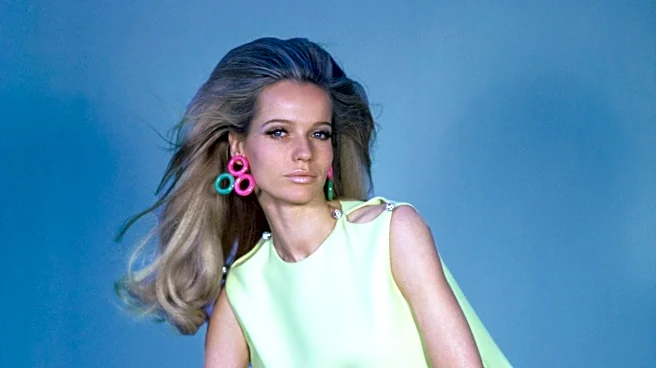
The fashion industry is paying tribute to Veruschka, the German supermodel who passed away at the age of 87. Known for her groundbreaking work in the 1960s and 1970s, Veruschka redefined the role of a model, transforming her body into an artistic medium.
She was a frequent cover star for Vogue and featured in numerous fantastical fashion editorials, expanding the creative possibilities within the industry. Her artistic endeavors extended beyond traditional modeling to include body painting, camouflage, and performance art. Richard Avedon, a renowned photographer, famously stated in a 1972 Vogue tribute that 'There is and will always be only one Veruschka,' a sentiment echoed by many in the fashion world today. Tributes from fellow models, designers, and photographers highlight her immeasurable influence, remembering her not only for her iconic images but also for her generosity, intellectual curiosity, and unique sense of humor. Twiggy, another iconic model, recalled her admiration for Veruschka and their eventual meeting, describing her as 'beautiful and exotic' and 'one of the greatest of all models.'
Why It's Important?
Veruschka's passing marks the end of an era for a figure who profoundly influenced the aesthetics and artistic direction of fashion photography and modeling. Her innovative approach challenged conventional norms, demonstrating that a model could be an active collaborator and artist rather than merely a passive subject. This shift in perception paved the way for future generations of models to explore their creativity and contribute more significantly to the artistic process. Her work with body painting and performance art also blurred the lines between fashion, fine art, and performance, enriching the cultural landscape. The outpouring of tributes from across the fashion spectrum underscores her lasting legacy and the deep respect she commanded. Her career serves as a benchmark for artistic expression within the commercial realm of fashion, reminding the industry of the power of individuality and creative vision. Her influence continues to resonate, inspiring contemporary artists and models to push boundaries and redefine beauty standards.
What's Next?
The fashion industry will likely continue to reflect on Veruschka's legacy, with potential retrospectives, exhibitions, or documentary features exploring her extensive body of work and impact. Her innovative techniques in body painting and performance art may see renewed interest, inspiring new artistic interpretations and collaborations. Fashion schools and photography programs could incorporate her work into their curricula as a case study in artistic modeling and creative expression. Designers and photographers may draw inspiration from her boundary-pushing approach, leading to new trends that emphasize artistic collaboration and unconventional beauty. The ongoing conversation about the role of models in the creative process may also be reignited, with a focus on empowering models as artists. Her influence could also be seen in editorial content, with fashion magazines potentially dedicating features to her iconic imagery and the stories behind her most memorable shoots, further cementing her place as a timeless icon.
Beyond the Headlines
Veruschka's career transcended mere fashion; it was a profound exploration of identity, transformation, and the human form as a canvas. Her willingness to experiment with her image, often transforming herself into different characters or blending into landscapes through body paint, challenged societal perceptions of beauty and femininity. This artistic fearlessness had deeper cultural implications, encouraging a broader acceptance of diverse forms of expression and pushing against the commercialization of beauty. Her work can be seen as a precursor to contemporary performance art and body art movements, highlighting the model's agency and intellectual contribution. Ethically, her approach emphasized collaboration and mutual respect between artist and subject, a dynamic that was not always prevalent in the fashion industry. Her legacy encourages a re-evaluation of the model's role, moving beyond superficiality to recognize the profound artistic and intellectual contributions individuals can make within the creative industries.