
What's Happening?
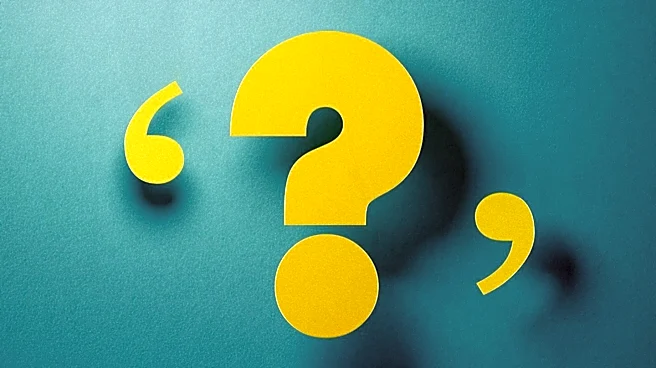
The Atlantic's trivia section, authored by Judith Shulevitz, delves into the historical and modern significance of punctuation. The article highlights a particular Renaissance-era punctuation mark referred
to as 'little moons' by the Dutch scholar Erasmus. This exploration is part of a broader discussion on the generational divide over punctuation, symbolized through Shulevitz's relationship with her son. Additionally, the article touches on the Writers Guild of America's guidelines for using 'and' versus the ampersand in movie credits, illustrating how punctuation can signify different collaborative processes in scriptwriting.
Why It's Important?
Understanding punctuation's evolution and its current applications is crucial for effective communication, especially in an era where digital communication often alters traditional language norms. The discussion on punctuation reflects broader cultural and generational shifts in language use, highlighting how younger generations may perceive and utilize punctuation differently. This can impact various fields, including education, publishing, and digital communication, where clarity and precision are paramount. The insights into scriptwriting conventions also underscore the importance of punctuation in professional settings, affecting how collaborative efforts are perceived and credited.