





What's Happening?
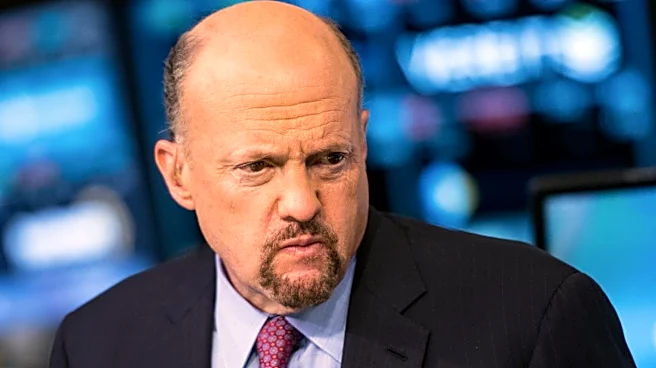
TJX Companies, the parent company of TJ Maxx and Marshalls, is under increased scrutiny following a report of only 1% comparable sales growth in its Marmaxx division. This figure was highlighted by Jim Cramer, who contrasted it with the stronger performance
of a key rival. TJX executives have acknowledged 'self-inflicted merchandising and execution problems' within Marmaxx, stating that these issues have been addressed. However, the company has not provided specific details regarding the actions taken to rectify these problems. This concern about Marmaxx's execution comes amidst broader trends and pressure points previously identified in research concerning TJX Companies. The Marmaxx division is central to TJX's off-price retail model, which relies on resilient margins and expanding earnings despite intensifying competition from other retailers like Ross Stores and big box stores.
Why It's Important?
The performance of the Marmaxx division is critical to TJX Companies' overall investment narrative, which heavily emphasizes its off-price model's ability to maintain strong margins and drive earnings growth. Jim Cramer's critique directly challenges the assumption that TJX's merchandising and allocation capabilities provide a key competitive edge, particularly for comparable sales and margin resilience. When management admits to internal issues without detailing corrective measures, it introduces uncertainty for investors regarding the effectiveness of their investments in these core capabilities. Marmaxx's central role in driving both customer traffic and profitability means that any sustained underperformance or unaddressed execution issues could significantly impact TJX's financial outlook and its competitive standing in the retail sector, potentially affecting shareholder value and market perception.
What's Next?
The immediate focus for TJX Companies will likely be on demonstrating tangible improvements in the Marmaxx division's performance in upcoming financial reports. Investors and analysts will be looking for evidence that the 'self-inflicted merchandising and execution problems' have indeed been resolved and that these fixes are translating into stronger comparable sales growth. The appointment of Craig A. Pintoff to the board, with his experience in risk and operational oversight, suggests a move towards tightening governance around execution and cost risks. This could lead to more transparent communication from management regarding operational strategies and their impact. The company's ability to reassure the market that its investments in merchandising, planning, allocation, and marketing are yielding consistent execution will be crucial for maintaining investor confidence and supporting its long-term growth thesis.
Beyond the Headlines
The situation at TJX Companies' Marmaxx division highlights a broader challenge within the retail industry: the constant need for agile and effective merchandising and supply chain execution, even for established players with successful business models. The off-price retail sector, while often seen as resilient during economic fluctuations, is not immune to operational missteps or intense competition. This event underscores the importance of internal capabilities, such as merchandising and allocation, as critical differentiators. It also raises questions about corporate transparency, as the lack of specific details regarding fixes for acknowledged problems can erode trust. The long-term implications could include a re-evaluation of how investors assess operational risk in large retail conglomerates and a greater demand for detailed accountability from management regarding core business functions.