









What's Happening?
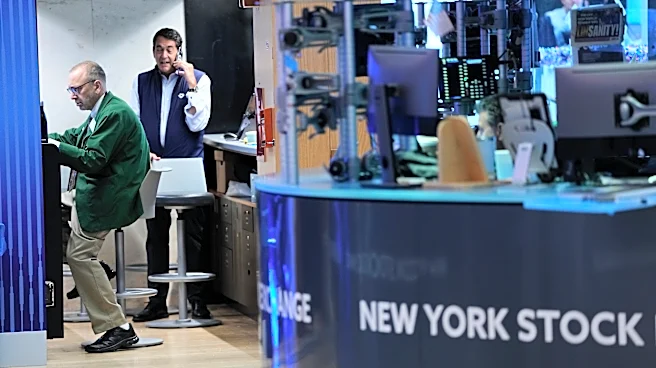
SK Hynix, a semiconductor manufacturing giant, has achieved the largest US listing by a foreign company, raising approximately $26.5 billion. The company began trading at $149 per share, surpassing the previous record set by Alibaba in 2014. This milestone
highlights the growing enthusiasm for tech stocks, driven by a surge in demand for memory chips used in artificial intelligence (AI) applications. The listing provides American investors with direct access to one of the year's most lucrative trades. SK Hynix, along with Samsung, has significantly contributed to South Korea's stock market growth, making it the world's seventh-largest. The demand for AI infrastructure has led to increased investments in data centers and chip manufacturing, with South Korea planning to spend over $500 billion on new facilities.
Why It's Important?
The SK Hynix IPO is significant as it underscores the global appetite for AI infrastructure, despite market volatility. The funds raised will enable SK Hynix to expand its production facilities, potentially outpacing competitors like Samsung and closing the valuation gap with US rivals such as Micron. This development is crucial for maintaining South Korea's technological edge and supporting its economy. However, the rapid expansion and leveraged investments in tech stocks raise concerns about a potential downturn in the semiconductor market, which could impact US business investments and lead to a slowdown in Asian exports.
What's Next?
SK Hynix plans to use the capital from the US listing to construct new production facilities in South Korea, aiming to enhance its manufacturing capacity. The South Korean government is also pushing for fast implementation of plans to secure resources for chipmaking. However, the cyclical nature of the semiconductor market and potential shifts in AI investment sentiment could pose challenges. Analysts warn that if earnings do not meet expectations, tech stock prices may fall, affecting business investments and potentially leading to a bust in Asian exports.