



What's Happening?
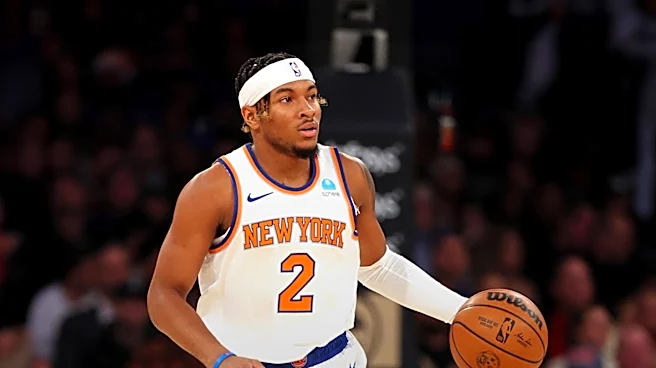
The New York Knicks are engaged in ongoing contract negotiations with guard Miles McBride, who is entering the final year of his current contract. According to SNY’s Ian Begley, while both parties are in regular contact, a long-term extension is complicated
by the Knicks' financial situation. McBride has significantly outperformed his current three-year, $13 million contract, averaging a career-high 12.0 points and shooting 41.3% from three-point range last season. The primary obstacle to a new agreement is Knicks owner James Dolan's mandate to avoid exceeding the NBA’s $221 million second apron this season. This financial constraint limits the team's flexibility, especially with potential extensions looming for other key players like Karl-Anthony Towns, Josh Hart, and Jalen Brunson. Despite these challenges, neither the Knicks nor McBride's representatives have abandoned the possibility of reaching an extension, as McBride is a valued contributor and the longest-tenured player on the team following Mitchell Robinson’s departure.
Why It's Important?
This situation highlights the intricate financial balancing act NBA teams face under the league's salary cap and apron rules. For the Knicks, retaining a valuable player like Miles McBride while adhering to owner-imposed financial limits is crucial for maintaining roster stability and competitiveness. Exceeding the second apron triggers significant luxury tax penalties and can restrict future team-building efforts, impacting draft picks and trade flexibility. For McBride, securing a long-term deal reflects his increased value and performance, but the team's financial constraints could force him to consider other options or a trade. This scenario also sets a precedent for how the Knicks will manage future contract negotiations with other key players, potentially influencing their ability to retain talent and build a championship-contending roster within the league's financial framework. The outcome of these talks could determine the long-term composition and financial health of the team.
What's Next?
Miles McBride is set to begin the upcoming season in the final year of his contract. While an extension remains a possibility, the financial constraints faced by the Knicks suggest that a resolution may not be straightforward. If an agreement cannot be reached, the Knicks might consider trading McBride before the trade deadline to avoid losing him for no compensation in free agency. Begley noted that McBride is considered one of the league's most valuable sixth-man trade assets, which would likely attract significant interest from other teams. Conversely, if the Knicks manage to navigate their financial limitations and secure an extension, it would solidify their roster for the foreseeable future. The team's ability to manage its salary cap effectively will be critical as they also face potential extensions for Karl-Anthony Towns, Josh Hart, and Jalen Brunson, all of which will further impact their financial flexibility.
Beyond the Headlines
The ongoing contract negotiations with Miles McBride underscore a broader trend in professional sports where player value often outpaces initial contract terms, leading to complex financial decisions for teams. This situation also reflects the growing importance of role players and their impact on team success, as McBride has become an integral part of the Knicks' lineup. The owner's mandate to stay below the second apron highlights a strategic financial approach aimed at long-term sustainability rather than short-term spending, which can be a double-edged sword. While it helps avoid punitive taxes, it can also lead to difficult choices regarding player retention. The emotional aspect of a player's connection to a team and city, as noted by Begley regarding McBride's love for New York, adds another layer to these business decisions, often creating tension between financial realities and team loyalty. This dynamic is a constant challenge for front offices in the NBA.