





What's Happening?
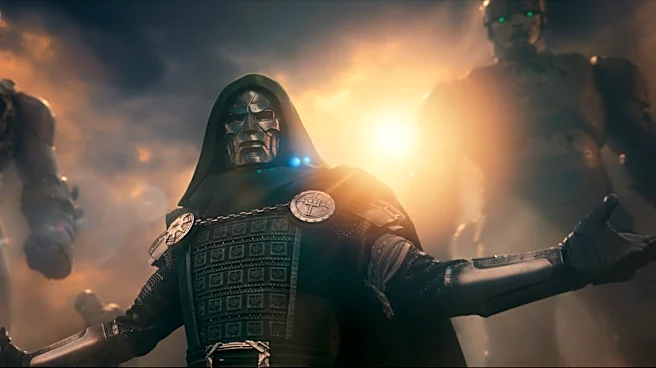
The final trailer for 'Avengers: Doomsday' has provided deeper insights into the film's emotional core and the motivations of its antagonist, Doom. The narrative suggests that Steve Rogers (Chris Evans) will grapple with the consequences of his actions
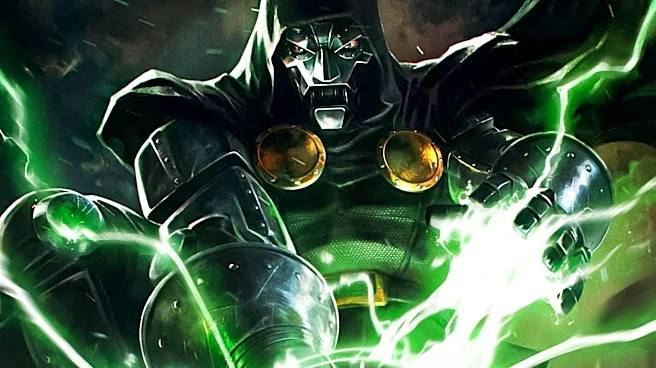
with the Infinity Stones in 'Avengers: Endgame,' which are depicted as having caused significant cracks in the Marvel Multiverse, leading to the 'Doomsday' event of mass incursions. A prominent theory emerging from the trailer and related discussions posits that Doom, portrayed by Robert Downey Jr., is not merely a villain but is seeking to preserve life and existence amidst the collapsing multiverse. However, his methods are described as nefarious. This theory suggests Doom is collecting or siphoning power from 'omega-level' characters, akin to Thanos collecting Infinity Stones, to create and maintain a new reality. Confirmed targets or characters expected to appear include Hulk, Scarlet Witch, and Franklin Richards, all possessing powers capable of creating new worlds, influencing populations, or decimating opposition.
Why It's Important?
This development is significant for the Marvel Cinematic Universe (MCU) as it redefines the stakes and the nature of its primary antagonist for the upcoming 'Avengers: Doomsday' and 'Avengers: Secret Wars' films. By portraying Doom as a figure attempting to preserve existence, albeit through morally ambiguous means, the narrative introduces a complex ethical dilemma that could resonate with audiences. The concept of 'omega-level' characters and Doom's strategic collection of their powers elevates the threat level and promises a series of high-stakes confrontations. This approach also sets a precedent for future MCU narratives, potentially exploring more nuanced villains whose motivations are rooted in a twisted sense of preservation rather than pure destruction. The film's success in portraying this complex antagonist could influence how future superhero narratives tackle themes of morality, power, and the greater good within a collapsing multiverse.
What's Next?
As 'Avengers: Doomsday' approaches its release on December 18th, audiences can anticipate further speculation and analysis regarding Doom's ultimate plan and the specific roles of the 'omega-level' characters he targets. The film is expected to set the stage directly for 'Avengers: Secret Wars,' which is based on a comic book event where Doom created 'Battleworld' from remnants of doomed realities. This suggests that the events of 'Doomsday' will directly lead to the formation of a new, potentially fractured reality under Doom's influence. Future trailers, promotional materials, and interviews with the cast and crew may offer more clues about the specific powers Doom seeks to harness and the extent of his influence over the collapsing multiverse. The film's reception will also likely dictate the direction of subsequent MCU phases, particularly concerning multiversal threats and the moral complexities of its characters.
Beyond the Headlines
The portrayal of Doom as a complex figure striving for preservation through nefarious means introduces a deeper philosophical layer to the superhero genre. This narrative choice challenges the traditional black-and-white morality often found in comic book adaptations, forcing audiences to consider whether the ends justify the means, especially when existence itself is at stake. Ethically, Doom's actions raise questions about the right to dictate the future of the multiverse and the potential for a single entity to wield such immense power. Legally, within the fictional framework, his actions could be seen as a form of cosmic authoritarianism, where individual liberties are sacrificed for a perceived greater good. Culturally, this shift towards more morally ambiguous antagonists reflects a broader trend in storytelling, where villains are given more depth and their motivations are explored beyond simple evil, potentially fostering more nuanced discussions among viewers about heroism and villainy in an increasingly complex world.