






What's Happening?
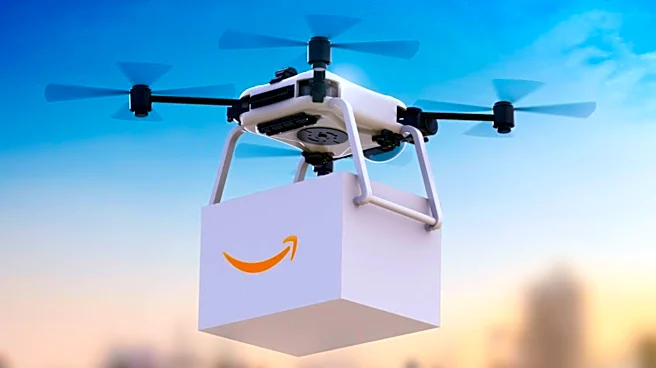
Amazon announced plans to significantly expand its drone delivery service, aiming to reach millions more people in nearly 500 U.S. cities by the end of the year. This expansion will increase its drone operation more than sixfold nationwide, targeting
suburban areas in metropolitan regions such as Chicago, Atlanta, Cleveland, and Boise. The service will deliver lightweight packages, up to 5 pounds, with a target delivery time of as fast as 30 minutes. While hundreds of thousands of packages have already been delivered by Amazon drones this year, this expansion is part of a broader strategy to intensify competition with companies like Walmart in providing rapid delivery services. The drones will primarily operate in suburban environments, avoiding the complexities of skyscrapers and major airports. Amazon's CEO, Andy Jassy, stated in April that the company aims to deliver half a billion packages by the end of the decade using this method.
Why It's Important?
This expansion marks a significant step in the evolution of last-mile delivery services in the U.S., potentially reshaping consumer expectations for speed and convenience. For Amazon, it represents a substantial investment in a technology that could reduce delivery costs and improve efficiency for certain types of orders. The intensified competition with Walmart and other delivery companies like DoorDash, which are also experimenting with drones, could drive innovation and lower delivery times across the industry. While drone delivery currently handles a small fraction of overall packages, its growth could lead to a new standard for urgent, lightweight deliveries, such as prescription medications. The economic model for this service is still being refined, with free delivery for Prime members on orders over $50, and tiered fees for smaller orders or non-members, indicating Amazon's strategy to integrate it into its existing Prime benefits.
What's Next?
Amazon will continue to navigate regulatory hurdles and address potential challenges such as noise concerns in the communities where it plans to operate. The company is already certified by the Federal Aviation Administration (FAA) and has received waivers for beyond-line-of-sight drone flights, but further regulatory finalization, particularly regarding a proposed rule for broader beyond-horizon drone operations, will be crucial. Amazon will also focus on refining the economics of drone delivery and overcoming operational challenges like tree cover and landscaping that can complicate package drops. The company expects to continue investing in its warehouse infrastructure, smaller fulfillment centers, and truck fleet to complement drone deliveries, aiming for a mix of delivery methods to achieve rapid delivery times. The success of this expansion will likely influence the pace of drone delivery adoption by other logistics and retail companies.
Beyond the Headlines
The widespread adoption of drone delivery could have profound implications beyond just convenience. Environmentally, electric drones could offer a more sustainable alternative to traditional delivery vehicles for short distances, reducing carbon emissions and traffic congestion in suburban areas. However, concerns about noise pollution and privacy, as drones fly over residential properties, will need to be addressed through community engagement and regulatory frameworks. The shift towards automated delivery also raises questions about the future of human delivery jobs and the potential for a more automated logistics workforce. Furthermore, the integration of drones into the national airspace system will require sophisticated air traffic management solutions to ensure safety and prevent collisions, potentially leading to new technological advancements in air traffic control and drone autonomy. The 'novelty' factor of drone delivery, as noted by retail analyst Sucharita Kodali, suggests that initial consumer adoption might be driven by curiosity, but long-term success will depend on consistent reliability and perceived value.