
What's Happening?
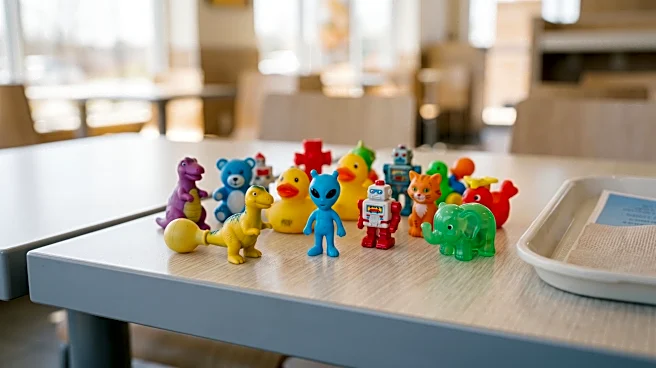
Sonic has announced the release of its new Hasbro Retro Wacky Packs, a collaboration with Hasbro that brings 10 new toys to its children's meals. These toys are designed to evoke nostalgia for individuals
who grew up in the 1980s and 1990s. The collection includes two mini Furbies, two Transformer figurines, two My Little Pony figures, two Littlest Pet Shop toys, and two mini NERF Super Soakers that are functional and squirt water. This initiative follows Sonic's previous nostalgic offering earlier in the year, which featured Hello Kitty meals with color-changing spoons. The Hasbro Retro Wacky Packs are available with a choice of a hamburger, chicken tenders, a hot dog, a corn dog, or a grilled cheese sandwich. Sides include Groovy Fries, tots, or applesauce, and drink options are milk, juice, or a soft drink. The company appears to be leveraging a strategy of appealing to adult nostalgia while marketing to children.
Why It's Important?
This marketing strategy by Sonic is significant as it taps into the powerful consumer trend of nostalgia, aiming to attract both children and their parents. By offering toys that resonate with the childhood memories of adults, Sonic can influence purchasing decisions, as parents might be more inclined to choose Sonic for their children's meals to obtain these retro collectibles. This approach can boost sales and brand engagement by creating a shared experience between generations. The inclusion of functional toys like the mini NERF Super Soakers adds an extra layer of appeal, potentially increasing demand. For the fast-food industry, this highlights the effectiveness of themed promotions and collaborations with established toy brands to differentiate offerings in a competitive market. It also demonstrates how companies can leverage emotional connections to drive consumer interest and loyalty.
What's Next?
Sonic will likely monitor the sales performance and customer feedback regarding the Hasbro Retro Wacky Packs to gauge the success of this nostalgic marketing campaign. If the promotion proves popular, it could lead to similar collaborations with other retro toy brands or further themed Wacky Pack releases in the future. Competitors in the fast-food sector may observe Sonic's strategy and potentially launch their own nostalgia-driven promotions to capture a similar market segment. Consumers can anticipate continued efforts from fast-food chains to innovate their children's meal offerings, possibly with more interactive or collectible items designed to appeal to a broader age range. The success of this campaign could also influence Hasbro to pursue more partnerships with food service companies, expanding the reach of their classic toy lines.
Beyond the Headlines
The trend of leveraging nostalgia in marketing, as seen with Sonic's Hasbro Retro Wacky Packs, reflects a broader cultural phenomenon where consumers seek comfort and familiarity in rapidly changing times. This strategy goes beyond simple product promotion; it aims to create an emotional connection with the brand by tapping into positive childhood memories. Ethically, companies must balance appealing to adult nostalgia with ensuring that the primary target audience—children—still finds value and enjoyment in the product. Legally, collaborations with major brands like Hasbro require careful licensing agreements and intellectual property considerations. Culturally, the enduring appeal of toys from past decades highlights the cyclical nature of trends and the lasting impact of popular culture on generations. This approach also subtly encourages intergenerational engagement, as parents might share stories and experiences related to these toys with their children, fostering a unique brand interaction.