
What's Happening?
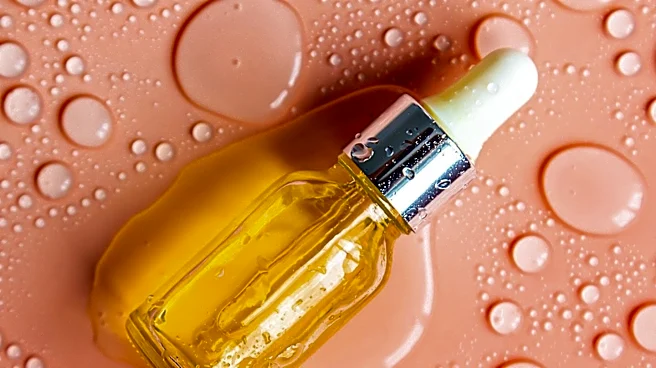
Peach & Lily, a K-beauty brand founded by Alicia Yoon, has seen its 'Glass Skin Refining Serum' achieve $100 million in sales within five years of its launch. Yoon initially introduced Korean beauty products
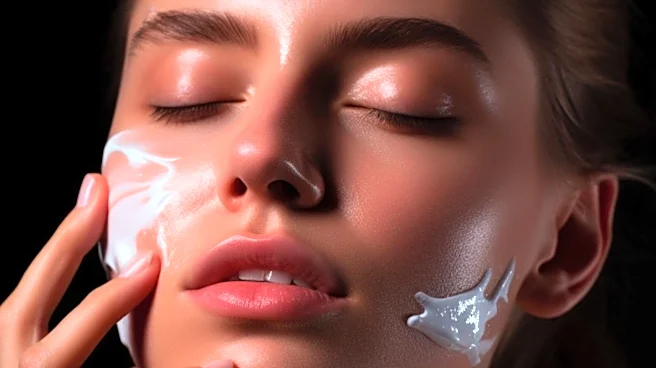
to the U.S. market as an e-commerce retailer, securing distribution rights for various Korean brands and pitching them to major U.S. retailers like Sephora, Urban Outfitters, and Target. She faced the challenge of educating buyers and consumers about K-beauty, which had minimal awareness in the U.S. in 2012. The brand's success with its own 'glass skin' concept, which emphasizes healthy, hydrated, and luminous skin, helped solidify its position and contributed significantly to the mainstream adoption of K-beauty in the United States. The 'glass skin' philosophy, as defined by Yoon, focuses on achieving each individual's healthiest skin baseline rather than a superficial, poreless complexion.
Why It's Important?
The success of Peach & Lily's 'Glass Skin Refining Serum' and its broader impact on the U.S. beauty market highlights a significant shift in consumer preferences and the growing influence of global beauty trends. Alicia Yoon's efforts in educating U.S. retailers and consumers about K-beauty were instrumental in transforming it from a niche discovery into a mainstream retail category. This demonstrates the power of effective marketing and product innovation in shaping consumer demand and opening new market segments. The 'glass skin' concept, by focusing on skin health and hydration, resonated with American consumers, leading to substantial sales and establishing a new aesthetic standard. This trend has implications for the U.S. beauty industry, encouraging more brands to explore and adapt international skincare philosophies and ingredients, potentially leading to a more diverse and health-focused product landscape.
What's Next?
The continued success of K-beauty concepts like 'glass skin' suggests a sustained interest in skincare routines that prioritize health, hydration, and gentle product layering. Brands in the U.S. beauty market are likely to further integrate K-beauty principles into their product development and marketing strategies. Peach & Lily, having established its brand with 'glass skin,' will likely continue to innovate, with Yoon suggesting that biotech and 'zombie cells' could define the future of K-beauty. This indicates a move towards more scientifically advanced and targeted skincare solutions. Consumers can expect to see an increasing array of products that promise similar results, emphasizing barrier care, hydration, and personalized approaches to skin health, moving beyond the initial novelty of K-beauty to a focus on proven performance and efficacy.
Beyond the Headlines
The 'glass skin' phenomenon, popularized by Peach & Lily, represents more than just a beauty trend; it signifies a cultural shift in how American consumers perceive and approach skincare. Moving away from aggressive treatments, the emphasis on achieving 'skin at its healthiest' promotes a more holistic and sustainable view of beauty. This shift has ethical implications, as it encourages consumers to prioritize long-term skin health over quick fixes, potentially reducing the demand for harsh chemicals and invasive procedures. Furthermore, the success of 'glass skin' underscores the increasing global interconnectedness of beauty standards and practices, with K-beauty leading the way in influencing Western markets. This trend also highlights the importance of clear communication and education in marketing, as Peach & Lily successfully translated a Korean concept into terms that resonated with American consumers, demonstrating the power of cultural adaptation in commerce.