






What's Happening?
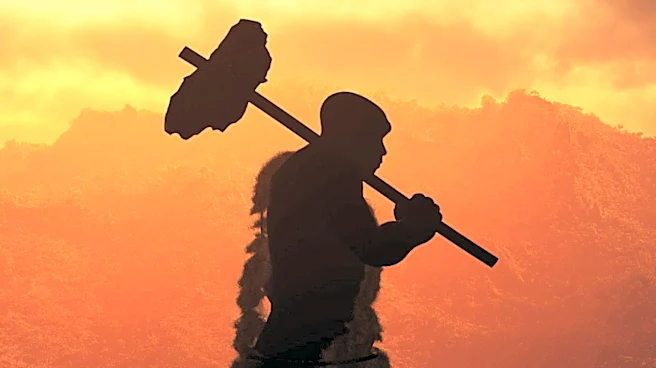
Titan Comics has launched 'Conan – Tides of the Tyrant King #1,' a new comic series that adapts two of Robert E. Howard's original works, 'Skull-Face' and 'Black Colossus,' into a single narrative. Written by Jim Zub with art by Jesus Merino, the story
unfolds across two distinct eras: the Hyborian Age and the Modern Era, with Merino's art style shifting to visually differentiate between the time periods. The comic also includes an essay by Robert Howard Historian Jeffery Shanks, titled 'The Atlantean Fu Manchu,' which provides historical context on the 'Yellow Peril' trope often found in pulp fiction. The creators have made efforts to update the problematic aspects of these historical narratives, with the writer Jim Zub ensuring no outwardly problematic depictions of characters in the new adaptation.
Why It's Important?
The release of 'Conan – Tides of the Tyrant King #1' is significant for fans of sword and sorcery and pulp comics, offering a modern adaptation of classic Robert E. Howard tales. The decision to integrate an essay discussing the 'Yellow Peril' trope directly within the comic highlights a growing awareness and effort within the publishing industry to address and contextualize historical problematic elements in popular culture. This approach allows for the enjoyment of classic narratives while acknowledging and mitigating their potentially offensive aspects. For the U.S. comic industry, it represents a step towards more inclusive storytelling and a responsible engagement with its historical content. The success of this adaptation could influence how other publishers approach reinterpreting older works with sensitive themes, balancing fidelity to the source material with contemporary ethical considerations.
What's Next?
The series is expected to continue exploring the intertwined narrative across the Hyborian and Modern Eras, with subsequent issues likely delving deeper into the 'threat to reality itself' that the story establishes. The reception of this first issue, particularly regarding its handling of the 'Yellow Peril' trope, will be crucial. Positive feedback could encourage more publishers to adopt similar strategies when adapting historical works with problematic elements, potentially leading to a trend of including contextual essays or making conscious updates to character depictions. Conversely, any missteps could lead to criticism and calls for greater sensitivity in future adaptations. Fans will be anticipating how the creative team continues to balance the pulpy action and epic scope of Conan with a nuanced approach to the source material's historical baggage.
Beyond the Headlines
The inclusion of an essay on the 'Yellow Peril' trope within a mainstream comic like Conan goes beyond simple storytelling; it engages with the broader cultural conversation about representation and historical revisionism in media. This move reflects a societal shift where audiences and creators are increasingly scrutinizing the origins and implications of popular narratives. It raises questions about the responsibility of modern creators when reinterpreting works from different historical contexts, particularly those that contain stereotypes or harmful portrayals. This trend could lead to a more critical and self-aware approach to genre fiction, encouraging deeper engagement with the ethical dimensions of storytelling. It also highlights the potential for comics to serve not just as entertainment, but as platforms for historical and cultural commentary, fostering a more informed readership and a more conscientious creative process within the industry.