



What's Happening?
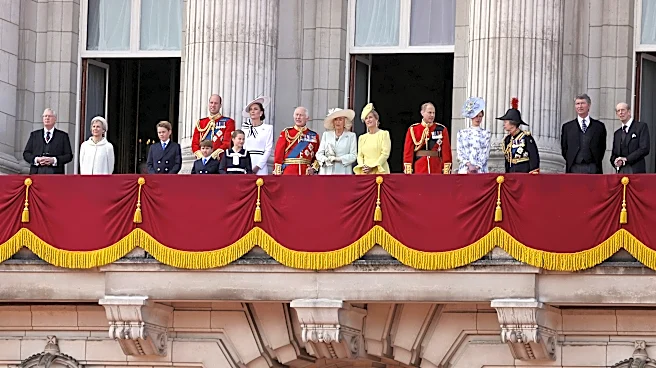
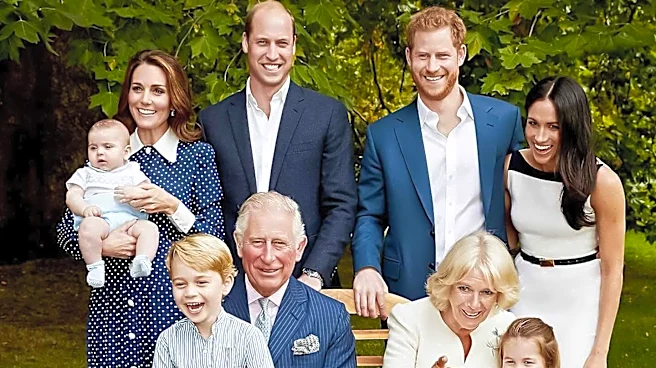
Buckingham Palace insiders are reportedly infuriated by Prince Harry's request to be added to the royal family's private scheduling network, often referred to as the 'royal grid.' This internal system, controlled by private secretaries at Clarence House
and Kensington Palace, is designed to prevent scheduling conflicts and ensure that King Charles, Queen Camilla, and the Prince and Princess of Wales do not overlap or detract focus from each other's engagements. Royal commentator Richard Fitzwilliams suggests that the Duke of Sussex's recent public actions, often coinciding with significant events for working royals, indicate a deliberate pattern. While critics argue that granting access to someone outside the working royals would lead to more scheduling overlaps, supporters view Harry's request as a peace offering aimed at preventing future diary collisions. An insider mentioned that Prince Harry is 'mindful' of the monarchy's commitments when planning his own activities in Britain.
Why It's Important?
This development highlights the ongoing strain in relations between Prince Harry and the royal family, with implications for how the monarchy manages its public image and internal dynamics. The 'royal grid' is a critical tool for coordinating official engagements and maintaining a unified front for the monarchy. If Prince Harry were granted access, it could either facilitate better coordination, as his supporters suggest, or, as critics fear, create further complications and potential for perceived competition for public attention. The controversy underscores the challenges of defining roles and boundaries for non-working royals, particularly those with significant public profiles. The Palace's reported 'infuriation' suggests a deep-seated concern about maintaining control over royal narratives and preventing actions that could be seen as undermining the institution's carefully managed public presence.
What's Next?
The immediate future will likely see continued tension surrounding Prince Harry's relationship with the royal family. The Palace's stance suggests that granting access to the private scheduling network is unlikely in the short term, given the reported 'infuriation.' This refusal could lead to further public speculation and media campaigns from both sides, potentially exacerbating the existing rift. Prince Harry may continue to plan his engagements independently, which could lead to further instances of perceived 'clashing' with official royal events, as noted by Richard Fitzwilliams. The situation could also prompt further discussions within the royal household about how to manage the public activities of non-working members and the extent to which they should be integrated into official royal planning.
Beyond the Headlines
The ongoing dispute over Prince Harry's access to the royal scheduling network touches upon broader themes of tradition versus modernity within the monarchy. The 'royal grid' symbolizes the structured, controlled environment in which the working royals operate, designed to uphold the institution's image and effectiveness. Prince Harry's desire for inclusion, whether seen as a peace offering or a strategic move, challenges this established order. It raises questions about the evolving role of royal family members who choose a path outside traditional duties and the extent to which they can maintain ties and influence within the institution. This situation also reflects the broader public's fascination with royal family dynamics, where personal relationships and institutional protocols often intersect, creating complex narratives that resonate globally.