




What's Happening?
The Berluti shoemaking dynasty, with a unique dual heritage rooted in Italy and France, has established itself as a prominent brand known for its high-quality craftsmanship and rebellious spirit. Founded in 1895 by Alessandro Berluti, who broke away from
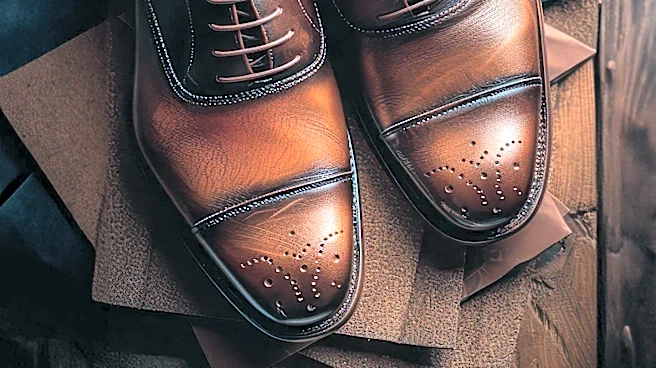
his farming lineage to become a barrel-maker before venturing into shoemaking in Paris, the company has attracted notable figures such as Andy Warhol, John F. Kennedy, Pablo Picasso, and Frank Sinatra. Olga Berluti, a third-generation shoemaker, emphasized the personal communication inherent in shoes. The brand's bespoke offerings are produced in its Paris atelier, while ready-to-wear footwear and leather goods are crafted in Ferrara, Italy, at the Manifattura Berluti, a facility opened in 2015. This production site, described by CEO Jean-Marc Mansvelt as a 'testimony to understated craft,' features a monolithic building clad in untreated red cedar, designed to develop a natural patina over time. The company's approach prioritizes both aesthetics and comfort, with a meticulous process involving hand-carved molds, digital 2D pattern conversion, and the use of Venezia calfskin, a material developed by Olga Berluti in the early 1990s.
Why It's Important?
The Berluti dynasty's success highlights the enduring appeal of luxury craftsmanship and bespoke products in a globalized market. Its ability to blend Italian shoemaking traditions with a distinct French identity creates a unique market position, demonstrating how heritage brands can thrive by maintaining authenticity while embracing innovation. The brand's association with American cultural icons like Andy Warhol and John F. Kennedy underscores its influence beyond fashion, positioning it as a symbol of discerning taste and individuality. This blend of historical legacy and contemporary relevance allows Berluti to command a premium in the luxury goods sector, influencing consumer perceptions of quality and exclusivity. The company's commitment to traditional techniques, such as hand-carved molds and specialized leather processing, also contributes to the preservation of artisanal skills that are increasingly rare in mass production. This model provides a blueprint for other luxury brands seeking to maintain their distinct identity and appeal to a high-end clientele.
What's Next?
Berluti is continuing to expand its global presence, as evidenced by the reopening of its Milan flagship store. This expansion suggests a strategic focus on strengthening its retail footprint in key luxury markets. The brand's ongoing commitment to both bespoke and ready-to-wear collections indicates a dual strategy to cater to a broad spectrum of high-end consumers, from those seeking unique custom pieces to those desiring accessible luxury. The emphasis on its dual heritage and rebellious spirit will likely continue to be central to its marketing and brand identity, appealing to consumers who value individuality and a rich backstory. Future developments may include further integration of sustainable practices, as suggested by the use of untreated red cedar at its Ferrara facility, aligning with growing consumer demand for environmentally conscious luxury goods. The brand's ability to adapt its traditional craftsmanship to modern sensibilities will be crucial for its continued success and relevance in the evolving luxury market.
Beyond the Headlines
The Berluti story extends beyond mere shoemaking; it represents a fascinating case study in brand longevity and the power of narrative. The 'rebellious spirit' of its founder, Alessandro, who defied family expectations, has become an intrinsic part of the brand's identity, resonating with consumers who value authenticity and a non-conformist attitude. The brand's ability to attract and collaborate with figures like Andy Warhol, whose bespoke loafer design became a permanent collection item, illustrates how cultural alignment can elevate a product into an icon. This deep connection between product, heritage, and cultural figures creates a powerful emotional resonance that transcends typical consumer-brand relationships. Furthermore, the dual Italian-French heritage symbolizes a broader trend in luxury where brands leverage diverse cultural influences to create a richer, more complex identity. This approach allows Berluti to tap into the distinct aesthetic and artisanal strengths of both nations, offering a unique proposition in the highly competitive luxury market.