


What's Happening?
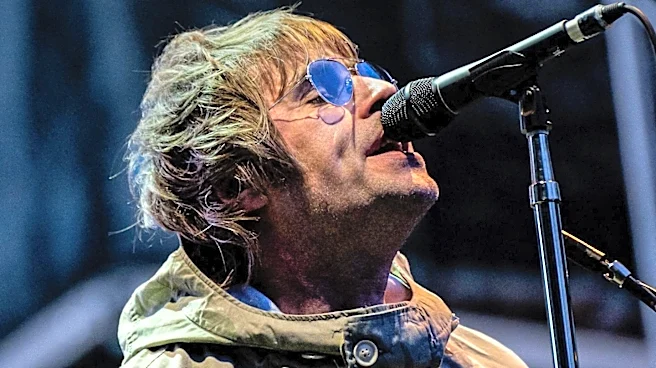
Steven Hyden's 'Catalog Club' is revisiting Oasis's 2005 album, 'Don't Believe The Truth,' hailing it as potentially the band's greatest post-imperial era record. The review highlights how the album marked a significant period where the band members,
particularly Andy Bell, contributed substantially to songwriting. Bell, formerly of the shoegaze band Ride, had been writing songs that resembled early Oasis tunes, making his contributions to 'Don't Believe The Truth' a natural progression. Noel Gallagher, typically the primary songwriter, penned only about half of the album, including the single 'Lyla,' allowing other members to step up and contribute a collection of strong tracks. This collaborative effort is seen as a key factor in the album's success and its re-evaluation as an essential entry in Oasis's discography.
Why It's Important?
This re-evaluation of 'Don't Believe The Truth' is important for several reasons within the music industry and for fans of Oasis. It challenges the long-held perception that Oasis's creative peak was solely in their early 'imperial phase,' suggesting that significant artistic merit and collaborative strength existed in their later work. For music critics and historians, it prompts a re-examination of the band's entire catalog, potentially shifting narratives around their evolution and individual member contributions. For fans, it offers a fresh perspective on an album that might have been overlooked in the shadow of their earlier, more commercially dominant releases, encouraging a deeper appreciation for the band's collective talent and songwriting depth beyond Noel Gallagher's primary role. This kind of critical re-assessment can also influence future music scholarship and fan engagement with the band's legacy.
What's Next?
The 'Catalog Club' review is part of a broader series by Steven Hyden, with upcoming installments planned for December 2026 and a special holiday announcement. This ongoing critical analysis of significant albums suggests a continued trend of re-evaluating and contextualizing musical works from various eras. For Oasis, this could lead to renewed interest in 'Don't Believe The Truth' and other post-imperial era albums, potentially boosting their streaming numbers and physical sales. It might also inspire other music critics and publications to conduct similar deep dives into the band's later discography, fostering a more nuanced understanding of their artistic trajectory. The discussion around this album could also spark debates among fans regarding its placement within Oasis's overall body of work.
Beyond the Headlines
The re-appraisal of 'Don't Believe The Truth' touches upon a broader cultural phenomenon in music criticism: the re-evaluation of artists' later works that may have been overshadowed by their initial, more explosive successes. This often highlights the evolution of a band's sound, the maturation of its members, and the collaborative dynamics that might not have been present in their earlier, more dominant periods. In the case of Oasis, it underscores the often-underestimated songwriting talents of members beyond the primary creative force, Noel Gallagher. This shift in perspective can lead to a more holistic understanding of a band's legacy, recognizing that artistic value isn't always confined to commercial peaks. It also speaks to the cyclical nature of music appreciation, where albums once considered secondary can gain new relevance and critical acclaim years later.