


What's Happening?
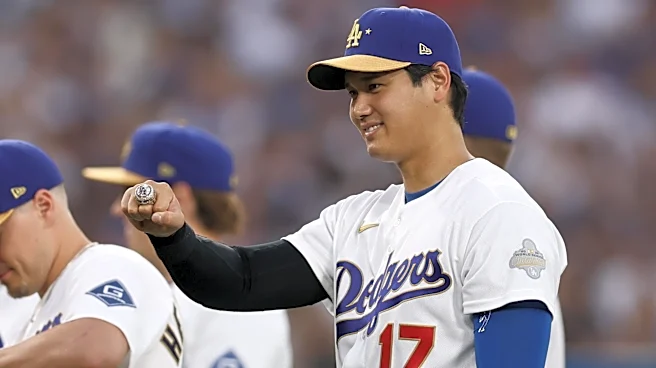
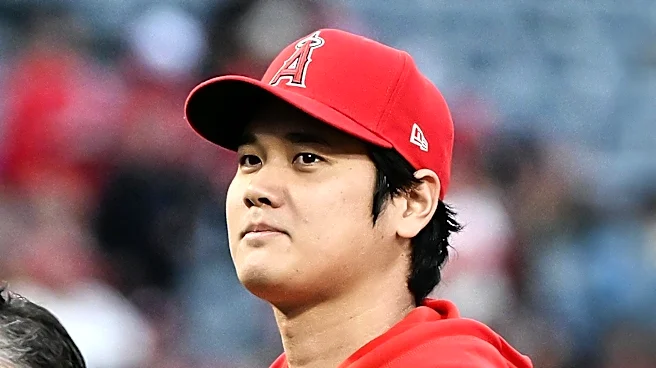
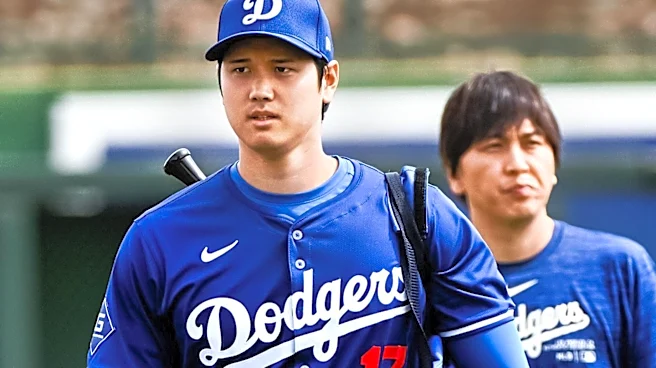
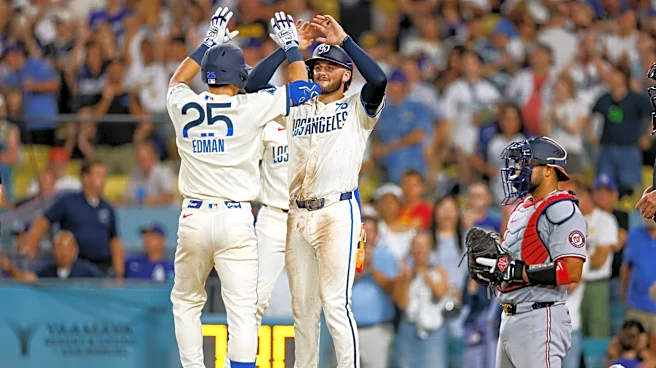
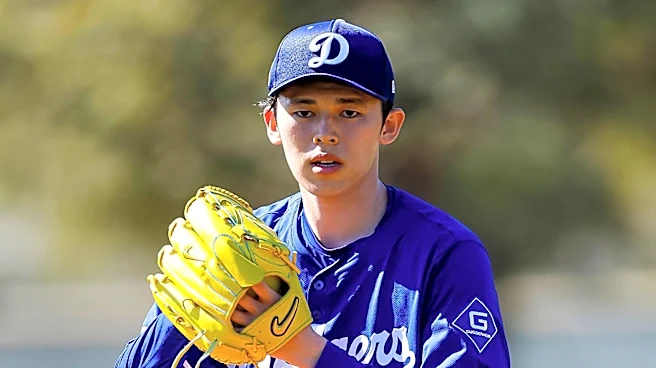
The Los Angeles Dodgers are evaluating whether their superstar player, Shohei Ohtani, should continue his two-way role as both a pitcher and a hitter following an injury-riddled 2026 season. Ohtani, 32, attempted a full-time two-way schedule for the first
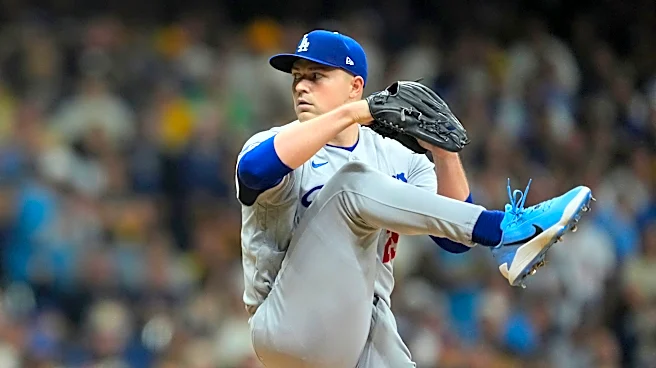
time with the Dodgers but suffered multiple injuries in the second half, including to his left knee and right biceps. He did not pitch after July 3 and his hitting performance declined significantly from mid-August, leading to a stint on the injured list in September. Despite these setbacks, Ohtani still finished second in the National League MVP voting behind Pete Crow-Armstrong, showcasing his dominant form when healthy. His season statistics included a .275 batting average with 30 home runs and 81 RBIs as a hitter, and an 8-2 record with a 1.79 ERA over 14 games as a pitcher. The Dodgers face the challenge of managing Ohtani's health to ensure his long-term effectiveness.
Why It's Important?
The decision regarding Shohei Ohtani's two-way status carries significant implications for both the Los Angeles Dodgers and Major League Baseball. For the Dodgers, Ohtani represents a substantial investment and a cornerstone of their franchise. His ability to perform at an elite level in both pitching and hitting roles is unprecedented, making him a unique draw for fans and a strategic asset on the field. However, the recurring injury concerns raise questions about the sustainability of this dual role and the potential for further health issues that could sideline him. If Ohtani is forced to abandon one aspect of his game, it could alter the team's roster construction, financial planning, and overall competitive strategy. For MLB, Ohtani's two-way success has been a major storyline, attracting global attention and potentially inspiring future players. A shift away from this role could impact the league's marketing efforts and the narrative surrounding one of its biggest stars.
What's Next?
The Dodgers are preparing for the 2027 season with a focus on Ohtani's health management. While Ohtani reportedly does not require surgery for his current injuries, the team is exploring strategies to keep him healthy. MLB.com suggests options such as not placing him in the starting rotation from Opening Day or scheduling more rest days when he plays as a hitter. The organization acknowledges that there are no established guidelines for managing two-way players, and they will need to rely on ongoing communication between the training staff and Ohtani. However, there are concerns that Ohtani has not always fully reported his physical condition, a common trait among superstars who prefer to play through injuries. If Ohtani continues to struggle with health, pressure from within and outside the organization could intensify for him to specialize in either pitching or hitting.
Beyond the Headlines
The ongoing debate about Shohei Ohtani's two-way role highlights a broader challenge in professional sports: balancing player ambition with long-term health and team performance. Ohtani's desire to excel in both disciplines is a testament to his extraordinary talent and dedication, but the physical toll of such a demanding role is evident. This situation could prompt a re-evaluation of how elite athletes are managed, particularly those with unique skill sets that push the boundaries of traditional roles. It also raises ethical considerations regarding player autonomy versus team responsibility for player welfare. The Dodgers' approach to Ohtani's future could set a precedent for how other organizations handle multi-talented athletes, potentially influencing training regimens, contract structures, and injury prevention protocols across professional baseball. The long-term impact on Ohtani's legacy and the evolution of the 'two-way player' concept will be closely watched.