






What's Happening?
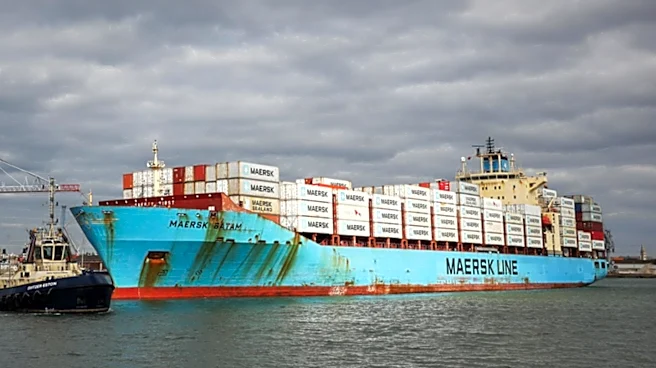
Maersk has announced a revision to its Peak Season Surcharge (PSS) for shipments from Japan and South Korea to Kenya, effective from December 1, 2026, for Japan and December 4, 2026, for South Korea. The revised tariff amounts are set at $400 for all
20-foot containers and $800 for all 40-foot and 45-foot containers. These rates are applicable to non-SPOT bookings, with the Price Calculation Date (PCD) for Federal Maritime Commission (FMC) regulated trades being the last container gate-in date for non-spot bookings. For non-FMC trades, PCD refers to the scheduled departure date of the first water leg at the time of booking confirmation. Maersk explicitly states that for trades subject to the U.S. Shipping Act, any quotations or surcharges that deviate from the Maersk tariff are not binding unless they are included in a service contract or service contract amendment filed with the Federal Maritime Commission (FMC).
Why It's Important?
This announcement is significant for U.S. businesses involved in international trade, particularly those with supply chains extending to or through Japan, South Korea, and Kenya. The application of the Peak Season Surcharge will directly impact shipping costs, potentially increasing the expenses for importers and exporters. The explicit mention of FMC oversight underscores the regulatory environment governing U.S. international ocean transportation. For U.S. companies, understanding and adhering to these tariff regulations, as enforced by the FMC, is crucial to avoid compliance issues and unexpected costs. The requirement for service contracts or amendments to be filed with the FMC for any tariff variations ensures transparency and fairness in pricing, protecting shippers from arbitrary rate changes. This regulatory framework helps maintain a level playing field and prevents potential abuses in the shipping industry, which is vital for the stability of U.S. trade relations and economic interests.
What's Next?
U.S. businesses engaged in shipping goods between Japan, South Korea, and Kenya via Maersk will need to factor these revised PSS rates into their logistics and budgeting. Shippers should review their existing service contracts and consider whether any amendments are necessary to reflect these new surcharges, ensuring they are properly filed with the FMC if subject to the U.S. Shipping Act. Maersk encourages customers to consult their local representatives or utilize the company's Tariff Lookup page for the latest rate structures and levels, which covers FMC and European Economic Area regulated countries. The continuous monitoring of such surcharges and adherence to FMC regulations will be essential for maintaining cost-effective and compliant international shipping operations. The FMC's role in overseeing these tariffs ensures that changes are transparent and justifiable, providing a degree of predictability for U.S. businesses.
Beyond the Headlines
The implementation of peak season surcharges by major carriers like Maersk reflects the dynamic nature of global shipping markets, influenced by factors such as demand fluctuations, capacity constraints, and operational costs. While these surcharges are a common practice, their regulation by bodies like the FMC highlights the importance of governmental oversight in preventing market distortions. The interplay between commercial shipping practices and regulatory requirements, particularly those under the U.S. Shipping Act, shapes the competitive landscape and impacts the overall cost of goods for consumers. This situation also subtly points to the broader economic implications of global trade routes, where even seemingly localized surcharges can have ripple effects across international supply chains, affecting the competitiveness of U.S. businesses and the prices of imported goods. The FMC's role is critical in balancing the commercial interests of carriers with the need for fair and transparent practices for shippers.