





What's Happening?
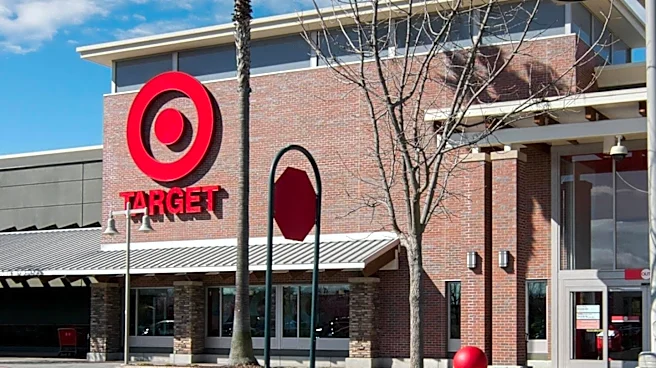
Marvin Ellison, the current CEO of Lowe's Home Improvement, has had a notable career path, starting from a $4.35-an-hour security guard position at Target to leading an $86 billion company. Ellison, who is also Chairman of the Board and President, attributes
his success to taking on challenging assignments that others avoided. He spent 15 years at Target, rising to director, before moving to Home Depot for 12 years, where he eventually oversaw approximately 2,000 U.S. stores. His tenure at J.C. Penney as CEO was less successful, with the company filing for bankruptcy two years after his departure. Ellison joined Lowe's in 2018 and immediately focused on understanding the company from the ground up, spending his first week interacting with hourly associates in stores rather than at headquarters. He quickly implemented significant changes, including closing 99 Orchard Supply stores and announcing 51 additional store closures in his first year. Ellison also initiated weekly video messages to associates to ensure direct communication. Under his leadership, Lowe's provided $915 million in COVID support to hourly associates in 2020, and hourly staff receive quarterly profit-sharing bonuses. The company's earnings per share increased from $4.09 before his arrival to $11.85 in fiscal 2025.
Why It's Important?
Ellison's leadership at Lowe's demonstrates a strategic approach focused on operational efficiency, employee engagement, and direct communication, which has significantly impacted the company's financial performance. His philosophy of taking on difficult tasks and engaging with frontline employees provides a model for corporate leadership, particularly in the retail sector. The substantial financial support provided to hourly associates during the COVID-19 pandemic and the implementation of profit-sharing bonuses highlight a commitment to employee welfare, which can foster loyalty and productivity. This approach is crucial in the competitive retail landscape, where employee morale and retention directly influence customer service and overall business success. The increase in earnings per share under his leadership indicates effective strategic decision-making and operational improvements that benefit shareholders and demonstrate the potential for revitalization in large retail corporations. His career trajectory also serves as an inspiration, emphasizing that a lack of 'pedigree' or Ivy League education does not preclude reaching the highest echelons of corporate leadership through dedication and a willingness to tackle challenges.
What's Next?
Under Marvin Ellison's continued leadership, Lowe's is likely to maintain its focus on operational excellence and employee-centric strategies. Future initiatives may include further optimization of store portfolios, continued investment in employee benefits and training, and leveraging direct communication channels to maintain a cohesive corporate culture. The success demonstrated by increased earnings per share suggests that Lowe's will continue to pursue strategies that enhance shareholder value while prioritizing the well-being of its workforce. Other retail companies may observe Lowe's model under Ellison, potentially adopting similar strategies for employee engagement and operational restructuring to navigate evolving market conditions. The emphasis on direct communication and understanding frontline operations could become a more widely adopted best practice in the retail industry, influencing how other CEOs approach their initial months in new leadership roles.
Beyond the Headlines
Marvin Ellison's career narrative extends beyond typical corporate success, offering insights into the value of experiential learning and servant leadership. His emphasis on understanding the business from the perspective of hourly associates underscores a belief that true problem-solving originates from the ground level, rather than solely from executive offices. This approach challenges traditional top-down management structures and highlights the ethical dimension of leadership—prioritizing the well-being and input of all employees. The significant financial support provided to employees during a crisis like COVID-19 also reflects a broader shift in corporate responsibility, where companies are increasingly expected to act as social entities with obligations beyond profit generation. Ellison's journey, from a security guard to a Fortune 500 CEO, also speaks to the enduring American ideal of upward mobility through hard work and strategic decision-making, regardless of one's starting point or educational background. This narrative can inspire discussions about diversity in leadership and the importance of creating pathways for individuals from all backgrounds to achieve executive roles.