



What's Happening?
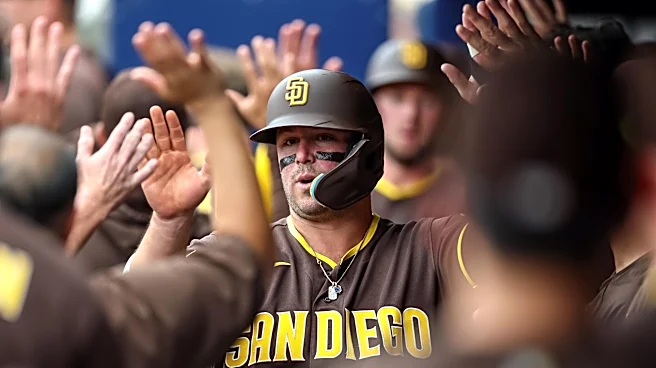
Eduardo Ortega, a 63-year-old Broadcasting Hall of Famer, is celebrating 40 years as the Spanish voice of the San Diego Padres. Ortega, a native of Tijuana, began his baseball announcing career at 17 and joined the Padres at 22. Throughout his extensive
career, he has covered significant Padres moments, including Tony Gwynn's 3,000th hit, Trevor Hoffman's record-breaking save, and the franchise's first no-hitter. Beyond the Padres, Ortega has also lent his voice to 25 World Series, 20 MLB All-Star games, multiple World Baseball Classics, and numerous Caribbean Series. He emphasizes the value of the relationships he has built with players, coaches, front office staff, and fans over the decades. Ortega notes the scarcity of MLB play-by-play jobs, particularly in Spanish broadcasting, with only 22 out of 30 MLB teams currently offering Spanish audio. Despite his numerous accomplishments, Ortega's one remaining professional goal is to see the Padres win a World Series.
Why It's Important?
Ortega's four-decade career highlights the growing importance and dedicated following of Spanish-language sports broadcasting in the U.S. The fact that only 22 out of 30 MLB teams offer Spanish audio underscores a potential gap in serving a significant demographic of baseball fans. His long tenure with a single team, the San Diego Padres, demonstrates the deep connection broadcasters can forge with a community, particularly one with strong ties to Mexico and Latin America, like Tijuana and San Diego. This connection is crucial for fan engagement and loyalty, as Ortega himself notes that fans often approach him with stories spanning generations. His career serves as a testament to the cultural bridge that Spanish-language broadcasting provides, making baseball accessible and relatable to a diverse audience and enriching the overall fan experience for a vital segment of the U.S. population.
What's Next?
As Ortega continues his broadcasting career, the focus remains on his personal goal of witnessing a Padres World Series victory. His ongoing presence in the broadcast booth will likely continue to strengthen the bond between the team and its Spanish-speaking fanbase. The broader trend in MLB may see more teams recognizing the value of Spanish-language broadcasts, potentially leading to an increase in the number of teams offering such services. This could create more opportunities for Spanish-speaking broadcasters and further integrate diverse communities into the national pastime. Ortega's legacy will undoubtedly inspire future generations of broadcasters, particularly those aiming to connect with Hispanic audiences in the U.S. and beyond.
Beyond the Headlines
Ortega's career transcends mere sports commentary; it represents a significant cultural phenomenon. His role as the 'voice in Spanish' for the Padres has made him a familiar and trusted figure for generations of fans, particularly those of Mexican heritage in the San Diego-Tijuana region. This deep connection illustrates how sports broadcasting can serve as a powerful tool for cultural preservation and community building, offering a sense of belonging and shared identity. The emotional investment of fans, as described by Ortega, goes beyond the game itself, extending to the broadcaster who articulates their passion in their native language. His story also subtly highlights the evolving demographics of the U.S. and the increasing demand for culturally relevant content in mainstream entertainment, pushing sports organizations to adapt and embrace linguistic diversity.