
What's Happening?
Actor Rob Lowe disclosed in his Netflix documentary, 'Rob Lowe: The Outsider,' that he accepted a substantial salary reduction to play the role of Sam Seaborn in 'The West Wing.' Initially offered the part
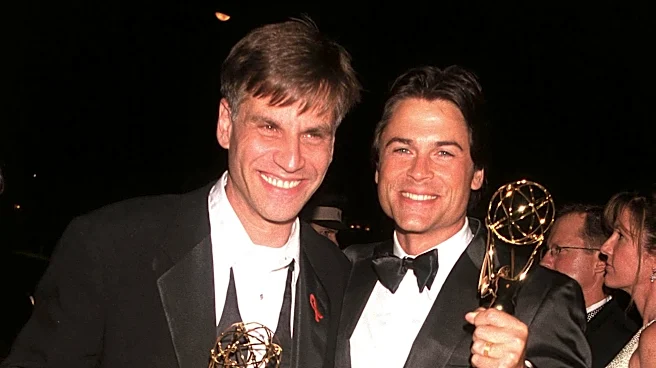
at a tenth of his usual salary, Lowe passed on it. However, the day before filming was set to begin, and after the production had struggled to cast the role, creator Aaron Sorkin insisted on Lowe. This led to a renewed offer at half his original salary, which Lowe accepted, prioritizing the quality of the work over financial compensation. This decision came during a period in Lowe's life where he sought roles that would keep him in Los Angeles, closer to his growing family.
Why It's Important?
Rob Lowe's decision to take a significant pay cut for 'The West Wing' highlights a common dilemma in the entertainment industry: balancing financial gain with artistic fulfillment and personal priorities. For Lowe, this move was pivotal in redefining his career, moving past his 'Brat Pack' reputation and establishing him as a respected dramatic actor. The success of 'The West Wing' and his performance as Sam Seaborn cemented his place in television history. This scenario also underscores the influence of key creative figures like Aaron Sorkin in casting decisions and the potential for actors to make career-defining choices that prioritize the quality of the project over immediate financial incentives.
What's Next?
Rob Lowe's documentary 'Rob Lowe: The Outsider' is currently streaming on Netflix, offering viewers further insights into his career and personal life. The revelations about his 'West Wing' salary dispute may spark renewed interest in the series and his acting choices. For Lowe, this candid admission reinforces his image as an actor dedicated to his craft. The ongoing discussion around actor compensation in Hollywood, particularly for high-profile projects, could also be influenced by such public disclosures, prompting further conversations about industry standards and the value placed on artistic contributions versus star power.
Beyond the Headlines
Lowe's narrative extends beyond a simple salary dispute; it reflects a broader shift in his life and career. His desire to remain in Los Angeles for his family, particularly after the birth of his son, illustrates how personal circumstances can profoundly influence professional decisions in Hollywood. The 'West Wing' role not only offered him a stable, location-friendly job but also provided a platform for a career resurgence, demonstrating the long-term benefits of strategic career choices. This story also subtly touches upon the power dynamics within the industry, where a creator's conviction can override initial financial hurdles, ultimately leading to iconic television. It underscores the idea that sometimes, the 'great work' itself is the most valuable compensation.