


What's Happening?
A new book details the life and work of American artist Robert Lee Eskridge (1891-1975), focusing on his profound connection to the South Seas. Eskridge first visited Tahiti in May 1927 and was immediately captivated, leading him to return repeatedly
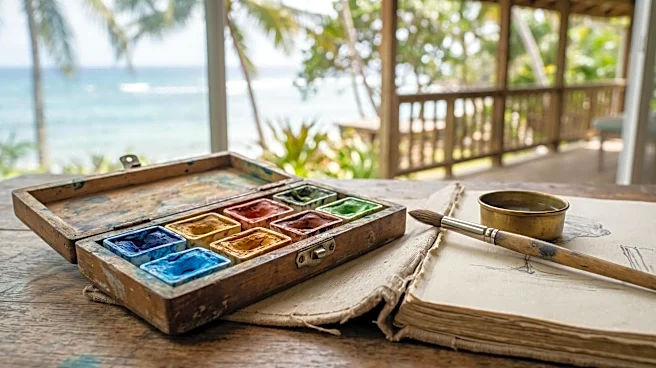
and eventually settle in Honolulu, Hawai’i. His artistic output from this period includes thousands of watercolors, hundreds of oil paintings, and three illustrated books. Eskridge's style blended Art Deco patterns with a relaxed realism, earning him commissions as an illustrator and artist, including murals for the Palmer House hotel in Chicago. The book highlights how Eskridge's work, unlike that of some contemporaries, depicted Islanders as active participants in their culture, engaged in daily life, work, dance, and music, while honoring their traditions. The publication features lavish illustrations from various collections and detailed captions, aiming to bring wider recognition to Eskridge's adaptable and sophisticated painting.
Why It's Important?
This publication is significant for art history and cultural studies, as it sheds light on an American artist whose extensive body of work on the South Seas has been underappreciated. Eskridge's respectful portrayal of Pacific Islander culture offers a counter-narrative to the often-colonial and romanticized views prevalent in Western art of the era. His commitment to depicting the Islanders' daily lives and traditions with authenticity provides valuable insights into the region's cultural heritage during the early to mid-20th century. The book's detailed account and numerous illustrations contribute to a more comprehensive understanding of American art's engagement with non-Western subjects and the evolution of artistic styles. By re-evaluating Eskridge's contributions, the book encourages a broader appreciation for artists who sought to genuinely connect with and represent diverse cultures, moving beyond superficial or exploitative depictions.
What's Next?
The release of this book is expected to generate renewed interest in Robert Lee Eskridge's art and potentially lead to new exhibitions or scholarly research on his work. Art institutions and collectors may re-evaluate his pieces, potentially increasing their market value and visibility. The book's focus on Eskridge's respectful engagement with Pacific Islander culture could also inspire further discussions on ethical representation in art and the importance of cultural sensitivity. Future academic studies might delve deeper into the influences on Eskridge's style, his interactions with local communities, and the broader context of American artists exploring non-Western themes during his lifetime. The book serves as a catalyst for a more thorough integration of Eskridge into the canon of American art.
Beyond the Headlines
Beyond its immediate artistic implications, the book on Robert Lee Eskridge touches upon broader themes of cultural exchange, representation, and the impact of colonialism. Eskridge's approach, which earned him acceptance from the Islanders, contrasts sharply with the experiences of other Western artists in the region, such as Paul Gauguin, whose work is often viewed through a post-colonial lens. This distinction highlights the ethical dimensions of artistic practice and the importance of genuine engagement versus exoticization. The book also subtly addresses the ephemeral nature of art, as evidenced by the painting over of Eskridge's Chicago murals, underscoring the constant re-evaluation and preservation efforts required in the art world. Furthermore, the mention of AI-produced images for some lost works raises contemporary questions about authenticity and technology's role in reconstructing historical art, adding a modern layer to the historical narrative.