


What's Happening?
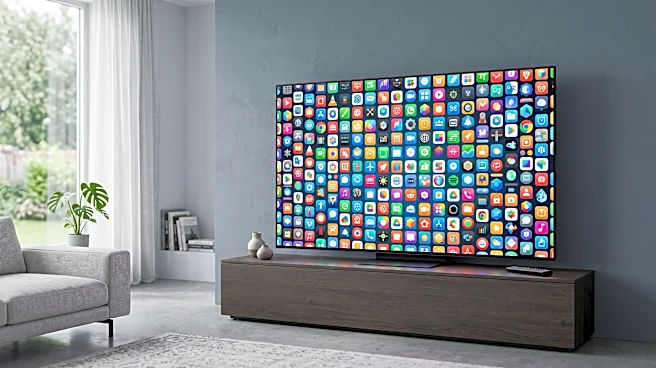
The evolution of smart TV software, such as LG's webOS, Google TV, and Roku OS, has led to an increase in features and user interface elements, making them feel less intuitive and more invasive for some users. What was once a simpler interface designed
as a home theater add-on has transformed into a crowded platform packed with apps, ads, and various UI components. This complexity can be particularly noticeable on entry-level TVs or streaming devices. While smart TVs offer direct internet connectivity and access to streaming applications without a traditional set-top box, the sheer volume of options and the integration of AI features are contributing to a less streamlined user experience, moving away from the 'dumber' smart TVs of the past that were arguably more endearing in their simplicity.
Why It's Important?
This shift in smart TV software design has significant implications for consumer satisfaction and the broader technology market. An overly complex or ad-laden interface can detract from the primary purpose of a television—content consumption—and lead to user frustration. For manufacturers, the challenge lies in balancing feature innovation with user-friendliness, as a poor software experience can negatively impact brand perception and sales. This trend also highlights the ongoing tension between providing extensive functionality and maintaining a clean, intuitive user interface. As AI features become standard, developers face the task of integrating these advanced capabilities without overwhelming users, which is crucial for the continued adoption and enjoyment of smart home entertainment systems.
What's Next?
It is unlikely that smart TV software will simplify significantly, given the ongoing integration of AI features and the push for more comprehensive digital entertainment ecosystems. Developers will likely continue to explore ways to manage the complexity, possibly through more personalized interfaces, improved search functionalities, or more efficient content curation. However, the core challenge of balancing numerous features with user experience will persist. Consumers may increasingly opt for external streaming devices with simpler operating systems, or prioritize TVs that offer a more streamlined software experience. This could lead to a bifurcation in the market, with some users preferring feature-rich, integrated smart TV platforms and others seeking more minimalist, dedicated streaming solutions.
Beyond the Headlines
The increasing complexity of smart TV software reflects a broader industry trend where technology companies are vying for user attention and data within the home. The proliferation of ads and UI elements can be seen as a monetization strategy, turning the TV into a more active platform for engagement rather than a passive display. This raises ethical considerations regarding data privacy, user control over content, and the potential for digital fatigue. The shift from a 'dumb' screen to a 'smart' hub also transforms the living room into a central node for digital life, impacting how families interact with media and each other. The challenge for the future will be to design smart technologies that enhance, rather than detract from, the human experience, ensuring that convenience does not come at the cost of simplicity and user well-being.