



What's Happening?
World Team Tennis (WTT) announced a new partnership with Mercedes-Benz USA, designating the luxury automaker as its Official Automotive Partner for the upcoming 47th season, which commences on December 1. This collaboration aims to enhance the experience
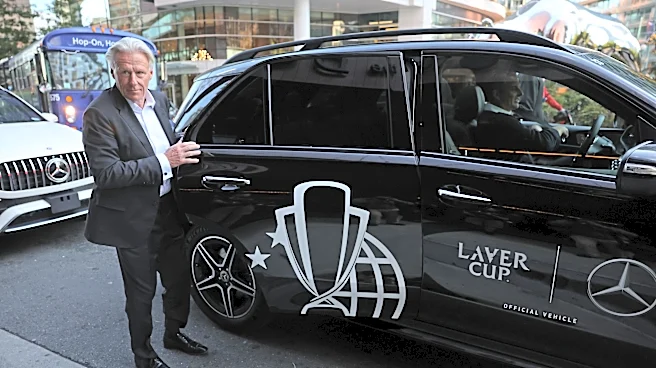
for WTT players and fans, building on Mercedes-Benz's historical association with tennis. The partnership will grant Mercedes-Benz a significant presence throughout the season, with its iconic star logo displayed on the net at every match and branding featured across digital courtside signage. Additionally, Mercedes-Benz will provide vehicle fleets for transporting WTT players, coaches, and league VIPs to and from matches, recognizing player arrivals as a growing aspect of tennis culture. Melody Lee, Chief Marketing Officer at Mercedes-Benz USA, expressed enthusiasm for supporting WTT's new energy and connecting the brand with fans. The upcoming WTT season will consist of six matches from December 1-15, featuring the Toronto North, New York Empire, and Florida Flamingos Racquet Clubs competing in various venues, including Barclays Center in Brooklyn, New York.
Why It's Important?
This partnership is significant for both World Team Tennis and Mercedes-Benz USA. For WTT, securing a high-profile sponsor like Mercedes-Benz elevates its brand image and provides crucial logistical support, signaling a renewed effort to grow the sport and attract a new generation of fans. The association with a luxury brand known for 'high performance and excellence' aligns with WTT's stated goal of setting a high standard as it rebuilds. For Mercedes-Benz USA, the partnership offers a strategic platform to connect with a demographic that aligns with its customer base, leveraging the sport's appeal and WTT's innovative format. The visibility at matches, through branding and player transportation, provides direct engagement opportunities and reinforces the brand's presence in the luxury sports segment. This collaboration could also set a precedent for other luxury brands looking to engage with evolving sports leagues, highlighting the value of integrated marketing and experiential sponsorships.
What's Next?
The immediate next step is the commencement of the 47th World Team Tennis season on December 1, where the partnership with Mercedes-Benz USA will be fully activated. Fans and players will experience the enhanced premium elements, including the Mercedes-Benz branding at venues and the provided transportation services. The success of this initial season will likely influence the long-term trajectory of the partnership and potentially attract further corporate sponsorships for WTT. Mercedes-Benz USA will monitor the engagement and brand visibility achieved during the season to evaluate the return on investment and inform future marketing strategies within the sports sector. The league will also be looking to leverage this high-profile partnership to increase ticket sales and viewership, further solidifying its position in the professional tennis landscape. Future seasons could see an expansion of Mercedes-Benz's involvement or the introduction of new fan engagement initiatives stemming from this collaboration.
Beyond the Headlines
This partnership reflects a broader trend in sports marketing where brands seek to integrate more deeply into the fan and player experience rather than just traditional advertising. By providing player transportation, Mercedes-Benz is not only gaining visibility but also becoming an integral part of the operational fabric of the league, creating a more authentic connection. This move also highlights the evolving landscape of professional tennis, with leagues like WTT aiming to innovate and capture new audiences through a blend of elite competition and entertainment. The emphasis on 'player arrivals' as a key moment underscores the growing importance of athlete personas and the overall spectacle surrounding sporting events. For Mercedes-Benz, this partnership reinforces its brand identity as a purveyor of luxury and performance, aligning with the aspirational aspects of professional sports. It also demonstrates a strategic pivot towards engaging with sports properties that are actively reimagining their format to appeal to contemporary audiences.