





What's Happening?
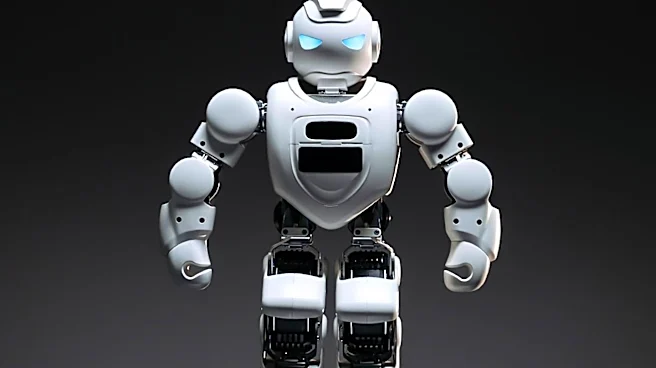
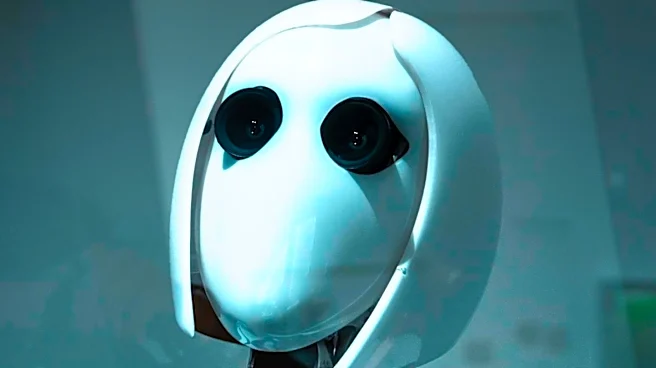
Generative Bionics has introduced a new humanoid robot named Gene.01 at the AMD Advancing AI conference in San Francisco. This robot is equipped with 'smart skin,' a layer of external sensors that enhance its interaction capabilities. The smart skin includes
touch sensors that can detect the location and force of touch, and proximity sensors known as time-of-flight sensors that sense nearby objects without direct contact. These features aim to prevent collisions and enable gentle interactions, potentially allowing robots to work more closely with humans. The company is focusing on using this sensory data for real-time decision-making, which is crucial for the robot's functionality in various environments.
Why It's Important?
The introduction of Gene.01 represents a significant advancement in robotics, particularly in enhancing human-robot interaction. The smart skin technology could revolutionize industries that require delicate handling and precise movements, such as healthcare and manufacturing. By improving the robot's ability to sense and respond to its environment, Generative Bionics is paving the way for more integrated and efficient robotic solutions. This development could lead to increased adoption of robots in everyday settings, impacting labor markets and operational efficiencies across multiple sectors.
What's Next?
Generative Bionics plans to continue developing Gene.01 by customizing its features to meet specific client needs. This includes varying the amount and location of smart skin and adapting the robot's hands or 'end effectors' for different tasks. The company is also working on applying the sensory data to real-time decision-making processes, which is essential for the robot's practical applications. As these technologies evolve, stakeholders in industries such as healthcare, logistics, and manufacturing may begin to explore partnerships and integration strategies to leverage these advancements.
Beyond the Headlines
The development of humanoid robots like Gene.01 raises ethical and cultural questions about the role of robots in society. As robots become more capable of interacting with humans, issues such as privacy, autonomy, and the potential displacement of human workers need to be addressed. Additionally, the integration of robots into daily life could lead to shifts in cultural norms and expectations regarding human-machine interactions. These considerations will be crucial as technology continues to advance and robots become more prevalent in various sectors.