




What's Happening?
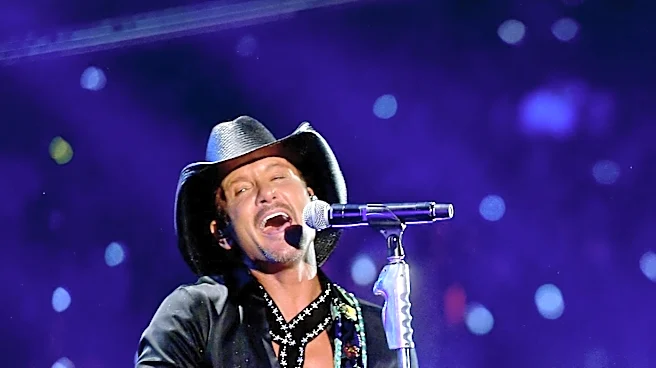
Country music superstar Tim McGraw has described the filming of Taylor Sheridan's 'Yellowstone' prequel, '1883,' as the most challenging job he and his wife, Faith Hill, have ever undertaken. McGraw revealed that the production schedule was brutal, involving
14-hour shooting days, six-day workweeks, and late-night flights for concert performances. He stated that if the demanding schedule had continued any longer, he might not have survived. The series, which follows the Dutton family's journey from Texas to Montana, was filmed in various locations, including Texas, and required the cast to undergo a rigorous cowboy camp to learn riding, roping, and shooting. McGraw also recounted filming a dangerous river crossing in freezing temperatures on his 25th wedding anniversary.
Why It's Important?
Tim McGraw's account highlights the intense physical and logistical demands placed on actors in high-production television series, particularly those with historical and outdoor settings like '1883.' His experience underscores the significant commitment required from performers, often balancing multiple professional obligations. The success of '1883' and the 'Yellowstone' franchise, despite these arduous production conditions, demonstrates the industry's drive to create authentic and immersive content. This level of dedication from cast and crew is crucial for delivering the quality that audiences expect from premium streaming productions. The narrative also sheds light on the behind-the-scenes realities of filmmaking, contrasting the glamorous perception of acting with the often-grueling work involved, which can impact the well-being of those in the industry.
What's Next?
While '1883' has concluded, McGraw's reflections may influence future production considerations for similar demanding projects within the 'Yellowstone' universe or other Western dramas. The insights into the rigorous filming conditions could lead to discussions about actor welfare, scheduling, and the balance between artistic ambition and practical limitations in the entertainment industry. For fans of the 'Yellowstone' franchise, McGraw's story adds a deeper appreciation for the effort invested in bringing these historical narratives to life. The continued popularity of these prequels and spinoffs suggests that audiences are willing to support productions that prioritize authenticity, even if it means challenging conditions for the cast and crew.
Beyond the Headlines
McGraw's experience on '1883' offers a glimpse into the broader cultural phenomenon of the modern Western genre, which often romanticizes a rugged, challenging lifestyle. The show's commitment to historical accuracy, including the demanding physical training and on-location filming, contributes to its authenticity but also reveals the human cost behind such portrayals. This raises questions about the sustainability of such intense production models and the potential for burnout among creative professionals. Furthermore, the success of '1883' and other 'Yellowstone' prequels reflects a societal yearning for narratives that explore themes of resilience, frontier spirit, and the American past, even as the production process itself pushes contemporary boundaries of endurance.