
What's Happening?
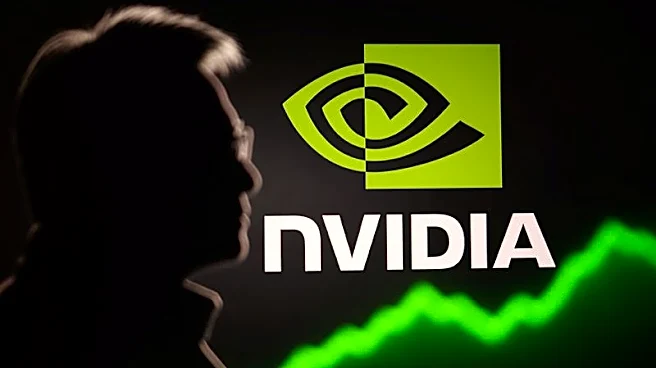
Nvidia's stock has seen significant fluctuations, with a surge on Monday followed by a dip on Tuesday, reflecting broader volatility in the artificial intelligence (AI) market. This comes after AI powerhouse
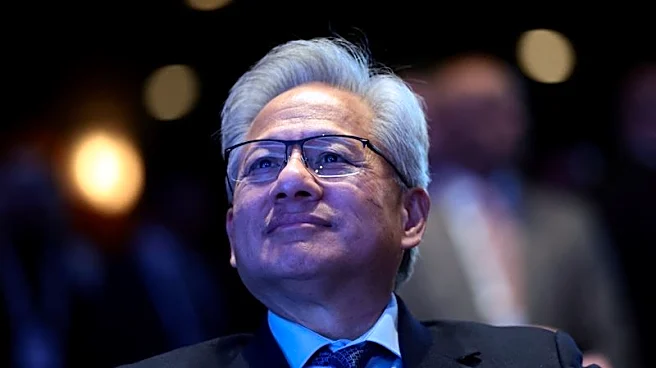
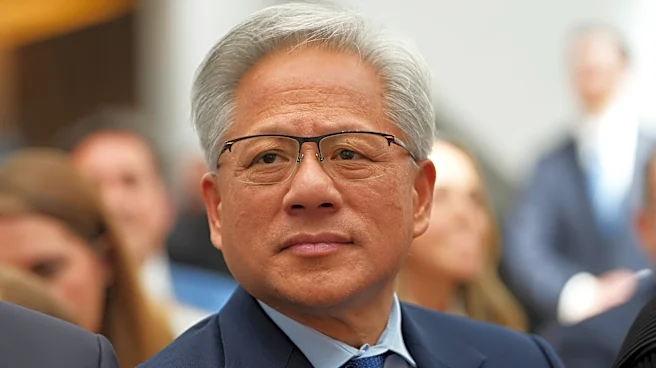
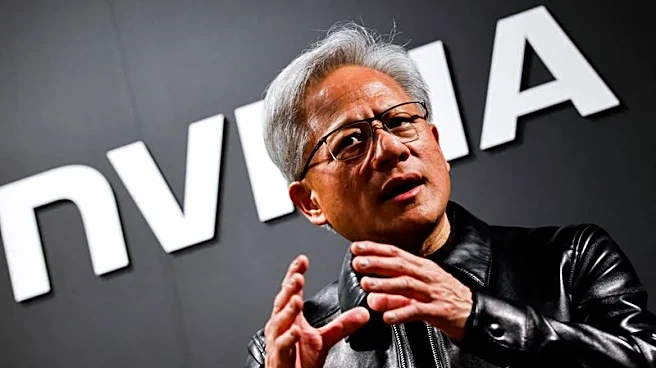
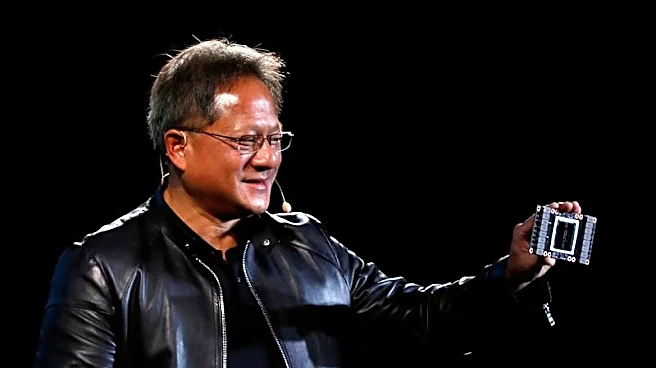
Anthropic's record-setting IPO and a subsequent tech sell-off. The market rally on Monday was largely attributed to the reinstatement of Jensen Huang as Nvidia's chief executive and president. President Trump intervened, lobbying Nvidia's board to bring Huang back, citing his indispensability to U.S. AI supremacy. Huang had previously resigned on November 12 amidst a scandal involving a relationship with a woman suspected by U.S. intelligence of being a Chinese spy. His return has drawn criticism, particularly from Democrats who are planning congressional hearings to investigate potential national security compromises and scrutinize the rapid construction of AI data centers. California's Attorney General Rob Bonta is also investigating whether Nvidia misled investors regarding its chip sales.
Why It's Important?
The volatility in Nvidia's stock and the broader AI market highlights investor uncertainty and the significant influence of key figures like Jensen Huang on the industry. Huang's leadership is considered crucial for Nvidia's development of essential AI chips and for his role as a prominent spokesperson for the sector. The controversy surrounding his resignation and reinstatement, coupled with impending congressional scrutiny, introduces governance challenges for Nvidia and could impact its ability to maintain its central role in the AI industry. The situation also raises concerns about national security implications related to relationships with foreign entities and the rapid expansion of AI infrastructure, which consumes substantial power and affects local communities. The market's sensitivity to these developments underscores the speculative nature of the current AI boom and the potential for a market correction, which could severely impact California, the epicenter of this new technology.
What's Next?
Nvidia and Jensen Huang face significant challenges ahead, including an ongoing internal board investigation into Huang's relationships and upcoming congressional hearings. These hearings, expected to be led by Democrats who will control both houses of Congress in January, will likely focus on whether Huang's past relationships compromised national security. Lawmakers are also expected to examine the surge in AI data center construction and its impact on power supplies and communities. California's Attorney General Rob Bonta's investigation into Nvidia's chip sales will also proceed. The outcomes of these investigations and hearings could significantly influence Nvidia's leadership, its market standing, and potentially lead to new regulations for the AI industry. The broader AI market will continue to be watched closely for signs of overheating or a potential bust, with experts divided on whether the current demand justifies the high valuations.
Beyond the Headlines
The events surrounding Nvidia and Jensen Huang reveal deeper implications regarding corporate governance, national security in the age of technological dominance, and the ethical considerations of rapid technological advancement. The intervention by President Trump in a corporate leadership decision underscores the perceived strategic importance of AI to national interests and the government's willingness to influence private sector operations in critical industries. The scrutiny over Huang's personal relationships highlights the increasing intersection of personal conduct, corporate leadership, and national security, particularly when dealing with sensitive technologies and international relations. Furthermore, the debate over whether the AI market is in a bubble or a sustainable growth phase brings to light the challenges of valuing nascent technologies and managing investor expectations. The environmental impact of AI data centers, with their substantial power demands, also points to emerging sustainability concerns that will require long-term policy solutions.