


What's Happening?
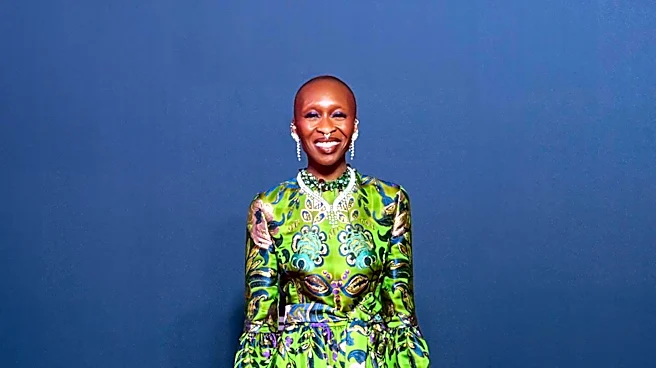
Cynthia Erivo has publicly commented on the criticism she and co-star Ariana Grande received regarding their friendship during the 'Wicked' press tour. Erivo noted that many online observers became 'psychologists from their couches,' expressing 'annoyance'
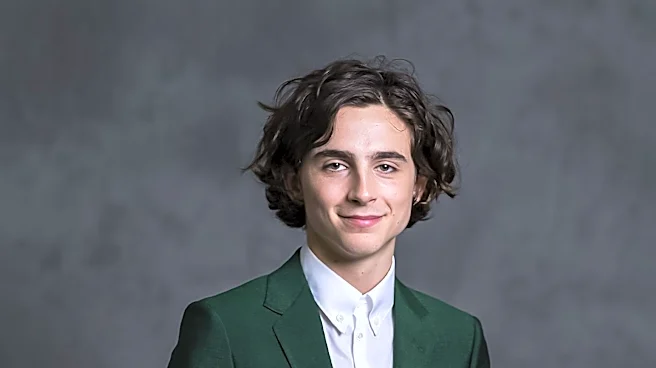
at the visible closeness between the two women. She highlighted a perceived double standard, suggesting that such scrutiny over a female friendship would not typically occur with male co-stars. Erivo questioned why the public seemed bothered by their genuine connection, emotional expressions, laughter, and tears, implying an expectation for them to be less emotive. The press tour itself generated numerous viral moments, including a notable interview where Erivo and Grande awkwardly held fingers, which later became a widely mimicked interaction by other celebrities like Timothée Chalamet and Elle Fanning.
Why It's Important?
Erivo's comments bring to light broader societal expectations and biases concerning female relationships in the public eye. Her observations suggest a persistent skepticism or discomfort when two prominent women display genuine affection and friendship, contrasting with how similar interactions between male colleagues might be perceived. This situation underscores the pressures faced by female celebrities to conform to certain emotional displays, where showing too much or too little emotion can both lead to public criticism. The viral nature of their interactions, and the subsequent mimicry by other stars, also illustrates how media narratives and public perception can shape and sometimes distort the reality of personal relationships, particularly within the entertainment industry. This discussion contributes to ongoing conversations about gender dynamics and media representation.
What's Next?
While Erivo's remarks address past events, they may spark further discussion within the entertainment industry and among the public regarding the treatment of female celebrities and their relationships. It could encourage more open dialogue about the double standards women face in media scrutiny. Future press tours and public appearances by female co-stars might be viewed through this lens, potentially leading to more conscious efforts by celebrities and their teams to manage public perception. The ongoing release and promotion of the 'Wicked' film will likely keep Erivo and Grande in the public eye, and their interactions may continue to be a subject of discussion, potentially influencing how similar friendships are portrayed and received in the future.
Beyond the Headlines
Erivo's experience points to a deeper cultural issue where female bonds are often scrutinized through a lens of suspicion or competition, rather than celebrated as genuine connections. This phenomenon can be linked to historical narratives that have often pitted women against each other, particularly in competitive fields like entertainment. The 'annoyance' Erivo described could stem from ingrained societal biases that struggle to reconcile powerful, successful women with authentic, supportive friendships. This situation also highlights the psychological toll that constant public judgment can take on individuals, forcing them to navigate an impossible standard of emotional expression. It raises questions about the responsibility of media consumers to critically examine their own biases when interpreting celebrity interactions.