







What's Happening?
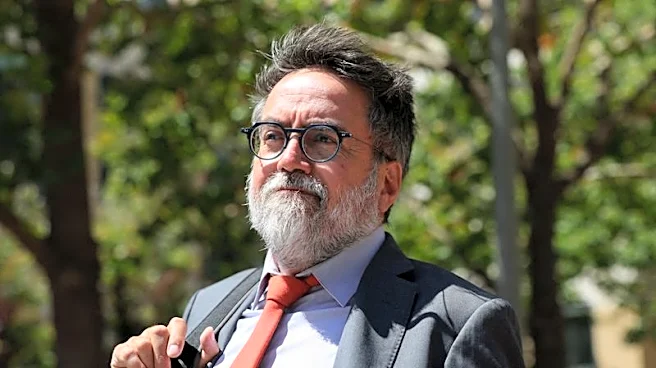
The Kentucky Horse Racing and Gaming Corporation (KHRGC) has rejected Maria Borell's latest application to regain her training license. This decision comes despite an independent hearing officer's recommendation to grant the license, which concluded that
the KHRGC 'failed to provide adequate due process and failed to present proof' in denying her license previously. Borell's attorney, Bob Heleringer, stated that they will now pursue the matter in Franklin Circuit Court. Borell, who has not trained a Thoroughbred in ten years, has been involved in a decade-long legal saga stemming from animal cruelty allegations in 2016. These charges, which involved 43 neglected horses on a farm leased by her father, were dismissed and expunged in 2023 after a plea deal. Borell maintains her innocence, asserting she had no involvement with the farm in question and that expunged matters cannot legally be used in licensing decisions under Kentucky law. The KHRGC's decision was made after a closed-door session, followed by a public voice vote to reject the hearing officer's recommendation.
Why It's Important?
This decision highlights ongoing tensions between regulatory bodies and individuals seeking to re-enter professional fields after past legal issues, particularly when those issues have been legally resolved. The KHRGC's rejection, despite a hearing officer's finding of insufficient evidence for denial, raises questions about the weight given to independent administrative reviews versus the commission's discretionary power. For the horse racing industry, it underscores the strict scrutiny applied to individuals with past animal welfare allegations, regardless of legal outcomes. The case also brings to the forefront the debate over 'selective enforcement' and fairness in licensing, as Borell claims men in the industry are often given multiple chances for more serious violations. The continued legal battle could set precedents for how past expunged charges are considered in professional licensing within Kentucky and potentially other states, impacting individuals seeking to rebuild their careers after legal challenges.
What's Next?
Maria Borell's legal team plans to appeal the KHRGC's decision to the Franklin Circuit Court. This move indicates a continuation of the protracted legal battle, shifting the venue from administrative review to the judicial system. The court will likely examine whether the KHRGC's rejection of the hearing officer's recommendation was arbitrary, capricious, or unsupported by law and evidence. Borell and her attorney anticipate a favorable outcome in court, arguing that the KHRGC lacks factual and legal grounds for its denial. The outcome of this court case could have significant implications for the KHRGC's licensing procedures and the legal standing of expunged records in professional licensing decisions within Kentucky. Depending on the court's ruling, it could either reinforce the KHRGC's authority or compel them to reconsider Borell's license application based on the hearing officer's findings.
Beyond the Headlines
The case of Maria Borell extends beyond a simple licensing dispute, touching upon broader themes of rehabilitation, due process, and the power dynamics within regulated industries. The KHRGC's decision to override an independent hearing officer's recommendation, particularly when that officer found a lack of evidence for denial, could be perceived as an assertion of regulatory authority that potentially disregards findings from its own administrative processes. This raises questions about the independence and effectiveness of such hearing officer roles. Furthermore, Borell's public statements about 'selective enforcement' and gender disparities in disciplinary actions within the horse racing industry highlight potential systemic issues that could warrant further examination. The long-term implications could include increased scrutiny of regulatory bodies' decision-making processes and a push for greater transparency and consistency in licensing, especially concerning individuals whose past legal issues have been formally resolved.