
What's Happening?
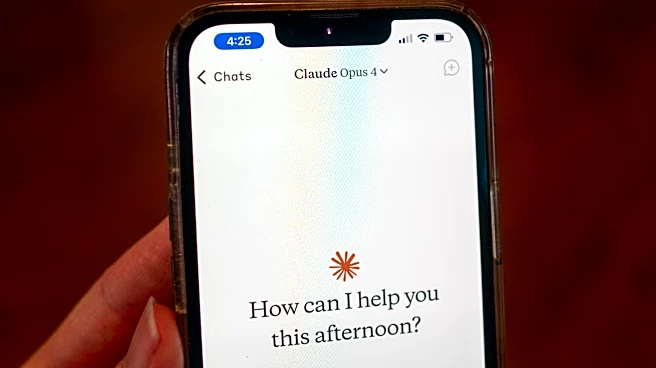
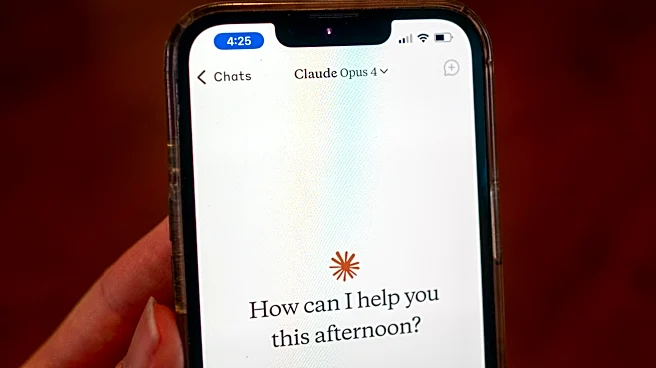
Anthropic's AI assistant, Claude, has rolled out a new beta feature allowing users to convert 'artifacts' into desktop applications. Artifacts are interactive outputs generated by Claude, which can include
charts, graphs, text, photos, and videos. Previously, these artifacts were confined within the Claude interface. With this update, users can now select an option to 'Install as an app' from a drop-down menu when viewing an artifact. These new desktop apps offer enhanced convenience, including the ability to send notifications and add items to the menu bar. While the feature is generally available, some specific artifact types, such as Claude Docs, Slides, and Sheets, are not currently supported for app installation. The functionality is enabled by default for Team plans and can be activated by owners for Enterprise plans.
Why It's Important?
This development signifies a notable step in integrating AI-generated content more deeply into users' daily workflows, particularly for those in business and professional settings. By transforming interactive AI outputs into standalone desktop applications, Anthropic is enhancing the utility and accessibility of Claude's capabilities. This could streamline tasks, improve productivity, and make AI-generated insights more readily available without needing to access the main Claude platform. For businesses, this means potentially faster decision-making and more efficient data utilization. The ability to set permissions for these apps also addresses security and control concerns, allowing users to manage the level of access these AI-derived tools have to their systems. This move could influence how other AI developers approach the delivery and integration of their services, pushing towards more embedded and interactive AI solutions.
What's Next?
As this feature is currently in beta, Anthropic will likely gather user feedback to refine its functionality and address any limitations. Future updates could expand the types of artifacts that can be converted into apps, potentially including the currently unsupported Claude Docs, Slides, and Sheets. There may also be further enhancements to the app's capabilities, such as more advanced notification options or deeper integration with other desktop functionalities. The success of this feature could also prompt other AI companies to develop similar capabilities, leading to a broader trend of AI outputs being transformed into more interactive and integrated desktop tools. Users on Enterprise plans will need their owners to enable the feature, indicating a phased rollout and potential for tailored enterprise solutions.
Beyond the Headlines
The introduction of AI-generated artifacts as desktop applications raises interesting questions about the evolving nature of software and user interfaces. It blurs the lines between traditional applications and AI outputs, suggesting a future where AI doesn't just provide information but actively creates and manages tools for users. This could lead to a paradigm shift in how individuals and organizations interact with AI, moving from query-response models to more dynamic, AI-driven application ecosystems. Ethical considerations around data privacy and security will become even more critical as AI-generated apps gain deeper access to user systems. The ability for these apps to send notifications and access system resources highlights the need for robust permission management and user education on potential risks and benefits.