
What's Happening?
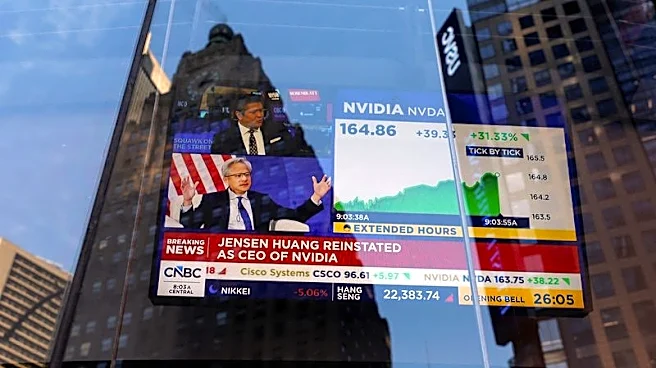
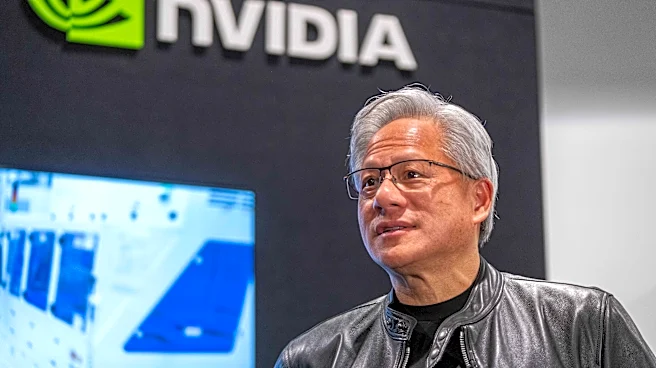
Nvidia's board of directors has unanimously reinstated co-founder Jensen Huang as its president, chief executive officer, and board director. This decision reverses a previous stance from the board last
week, which had indicated no intention of bringing him back. The reinstatement led to a significant surge in Nvidia's shares, with the stock opening at $167.04, up from its previous close of $125.53, and trading nearly 30% higher shortly after the market opened. The board's decision followed a series of discussions and meetings, during which they were satisfied with Huang's candor and leadership capabilities. Senior U.S. government officials also provided input, concluding that Huang's return posed no national security risk. President Trump publicly supported the reinstatement, calling it a 'correct and proper decision' and stating that the U.S. government had no evidence of Huang engaging in unlawful conduct. Attorney General Todd Blanche reportedly confirmed this assessment. Huang had resigned on November 12, with CFO Colette Kress serving as interim CEO.
Why It's Important?
The reinstatement of Jensen Huang as Nvidia's CEO carries significant implications for the technology sector and U.S. business. Nvidia is a leading company in the semiconductor industry, particularly in graphics processing units (GPUs), which are crucial for artificial intelligence and high-performance computing. Huang's leadership is seen as vital for the company's strategic direction and innovation. The dramatic fluctuation in Nvidia's stock price, with a nearly 30% jump upon his return, underscores investor confidence in his ability to lead the company. The involvement of President Trump and senior U.S. government officials in assessing national security risks highlights the strategic importance of companies like Nvidia in the current geopolitical landscape, especially concerning technology and export controls. This event demonstrates how political considerations and national security concerns can directly influence corporate governance and market dynamics within critical U.S. industries. The continued internal investigation into compliance with U.S. export controls also emphasizes the ongoing scrutiny faced by tech companies operating globally.
What's Next?
Following his reinstatement, Jensen Huang will resume his leadership role at Nvidia, guiding the company through what he described as 'the beginning of a new industrial revolution.' The board's independent investigation into reports that Huang was the target of a foreign intelligence effort will continue, with Huang committed to cooperating with the probe. President Trump has also urged Nvidia to continue its internal investigation into compliance with U.S. export controls, emphasizing it as a legal obligation and a duty to protect national security. This suggests that while Huang's leadership is restored, the company will remain under scrutiny regarding its international operations and adherence to U.S. regulations. Investors will likely monitor the progress of these investigations and their potential impact on Nvidia's business and market position. The company's strategic direction in the competitive semiconductor market, particularly in AI and advanced computing, will be a key focus under Huang's renewed leadership.
Beyond the Headlines
The reinstatement of Jensen Huang transcends a typical corporate leadership change, touching upon broader themes of national security, corporate governance, and the intersection of business and politics. The explicit involvement of President Trump and senior U.S. government officials in assessing the national security implications of Huang's return highlights a growing trend where the U.S. government takes a direct interest in the leadership and operations of strategically important technology companies. This could set a precedent for increased governmental oversight in sectors deemed critical for national interests. Furthermore, the ongoing internal investigation into foreign intelligence efforts and export control compliance underscores the complex ethical and legal challenges faced by global technology firms. It raises questions about the vulnerability of corporate leaders to external influence and the measures companies must take to safeguard intellectual property and national security. This event reflects a shifting landscape where corporate decisions are increasingly viewed through a geopolitical lens, impacting not only financial performance but also national strategic capabilities.