






What's Happening?
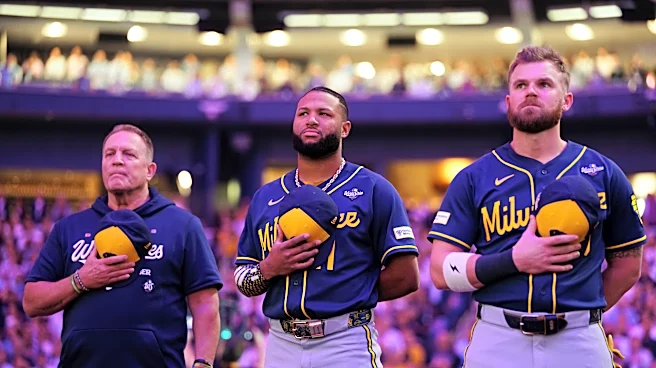
The Milwaukee Brewers, fresh off their first World Series championship in 2026, are surprisingly not considered a premier destination for free agents this offseason. Despite a dominant season that included a franchise-record 103 regular-season wins, four
consecutive National League Central division titles, and an 11-2 playoff run culminating in a sweep of the Los Angeles Dodgers, Bleacher Report's Kerry Miller ranked the Brewers at No. 10 among top free-agent destinations. This perception persists even after the team's significant success, which saw them demolish the Tampa Bay Rays in the championship. The Brewers have consistently reached the postseason in eight of the last nine years, demonstrating sustained competitiveness. However, their approach to team building, which emphasizes developing young talent and making low-risk trades rather than pursuing high-spending free agents, appears to influence their standing in the free-agent market.
Why It's Important?
This situation highlights a significant dynamic in professional sports, where on-field success does not always directly translate into desirability for top-tier free agents. For the Brewers, this means they may continue to rely on their established strategy of player development and strategic trades, potentially limiting their ability to acquire marquee free agents who command large contracts. This could impact the team's long-term competitiveness if other teams with larger payrolls can consistently attract top talent. The perception also affects player agents and their clients, who might prioritize higher salaries or larger markets over joining a championship-winning team with a more conservative spending philosophy. The Brewers' continued success despite this perception could also serve as a model for smaller-market teams, demonstrating that financial prudence and strong player development can lead to championships.
What's Next?
The Brewers are expected to continue their strategy of developing internal talent and pursuing low-risk, high-reward trades rather than engaging in bidding wars for top free agents. They have already secured young prospects like Jackson Chourio, Cooper Pratt, and Luis Lara with long-term, team-friendly deals, and Jacob Misiorowski remains a cost-effective superstar. The departure of Brandon Woodruff's $22 million salary frees up some budget, but the team is unlikely to pursue high-priced players like Tarik Skubal or Freddy Peralta. The upcoming offseason may also see discussions around the potential introduction of a salary cap and salary floor in MLB, which could significantly alter the free-agent landscape and potentially benefit teams like the Brewers by leveling the financial playing field. Their ability to maintain competitiveness without being a top free-agent destination will be a key storyline.
Beyond the Headlines
The Brewers' situation raises broader questions about the economic structure of professional baseball and the value placed on winning versus financial compensation by players. It underscores the challenge for smaller-market teams to compete with larger-market franchises that have significantly higher payrolls, even when achieving championship success. This dynamic could lead to ongoing debates about revenue sharing, salary caps, and other mechanisms designed to promote competitive balance in the league. Furthermore, it highlights a potential cultural divide within the sport, where some players prioritize maximizing earnings, while others might prioritize joining a winning culture, even if it means a smaller contract. The Brewers' sustained success with their current model could influence future team-building philosophies across the league, particularly if they continue to win championships without being major players in the free-agent market.