





What's Happening?
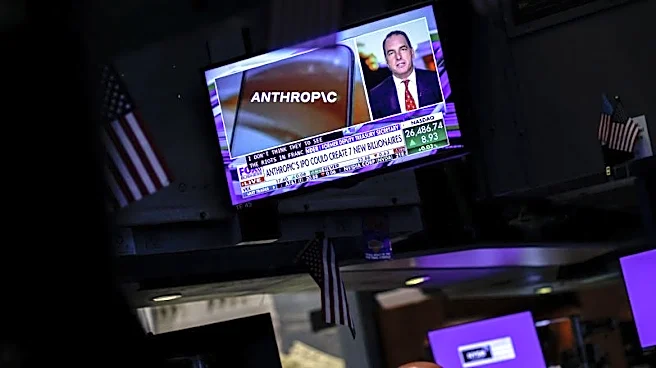
Spark Capital and Menlo Ventures are among the venture capital firms set to realize substantial gains following Anthropic's recent stock market debut. Anthropic, an artificial intelligence company, began trading on Nasdaq with an approximate valuation
of $1.5 trillion. Spark Capital was the initial venture capital firm to lead an investment in Anthropic, spearheading a $450 million Series C funding round in 2023 when the company was valued at $4.5 billion. Yasmin Razavi, a general partner at Spark Capital who led this investment, currently holds the sole investor seat on Anthropic's board. Menlo Ventures also secured a significant stake, committing over $1 billion for nearly 1.5% of the company. This investment, at a $1.5 trillion valuation, could be worth more than $20 billion. To facilitate this large investment, Menlo Ventures established a $750 million special-purpose vehicle, a common practice for AI companies requiring substantial funding beyond traditional venture fund capacities. The IPO highlights a shift in venture investing, where larger capital commitments are now necessary for high-growth AI companies.
Why It's Important?
The significant gains for firms like Spark Capital and Menlo Ventures underscore the transformative impact of the artificial intelligence boom on venture capital investment strategies and returns. This event signals a departure from traditional venture models, which typically involved smaller early-stage investments. The substantial funding requirements of AI companies like Anthropic necessitate much larger checks, even at valuations that were previously considered difficult to justify. This trend means that venture capital firms are increasingly raising special-purpose vehicles to invest beyond their existing fund capacities, allowing them to increase exposure to high-growth companies while distributing returns across a broader investor base. The success of Anthropic's IPO provides a benchmark for measuring the value of these investments and offers an opportunity for venture capital firms to return capital to their limited partners, potentially fueling further investments in the AI sector. This shift could lead to a concentration of capital in a few leading AI companies, reshaping the landscape of technological innovation and investment.
What's Next?
Following Anthropic's public listing, venture capital firms like Spark Capital and Menlo Ventures will likely begin to strategize the realization of their gains, which could involve managing lock-up arrangements and future share sales. The success of this IPO may encourage other AI companies to pursue public listings, further validating the high valuations seen in the private markets. This could also lead to an increased appetite among limited partners for special-purpose vehicles focused on AI investments, as they offer a mechanism to participate in these high-growth opportunities. The capital returned to venture firms from these gains will likely be reinvested into a new generation of AI startups, potentially accelerating innovation and competition within the sector. However, the long-term sustainability of these high valuations and revenue growth will depend on AI companies' ability to manage computing infrastructure costs, navigate competitive landscapes, and convert demand into durable profits.
Beyond the Headlines
The Anthropic IPO and the resulting windfalls for early investors like Spark Capital and Menlo Ventures highlight a broader economic and technological shift. The immense capital requirements for developing advanced AI models are creating a new class of 'mega-startups' that demand unprecedented levels of investment. This concentration of capital in a few leading AI companies raises questions about market access and competition for smaller innovators. Furthermore, the reliance on strategic investors like Amazon and Google, who provide both capital and crucial computing infrastructure, indicates a deepening integration between AI developers and major tech platforms. This dynamic could lead to increased consolidation in the AI industry, potentially shaping future technological ecosystems. The ethical implications of such powerful AI development, coupled with the financial incentives driving its rapid expansion, will likely become a more prominent discussion point as these companies mature and their influence grows across various sectors.