


What's Happening?
Joanna Gaines, the star of 'Fixer Upper' and co-founder of the Magnolia empire, has addressed a long-standing misconception about her design style. During an appearance on Kylie Kelce's podcast 'Not Gonna Lie,' Gaines clarified that she does not want
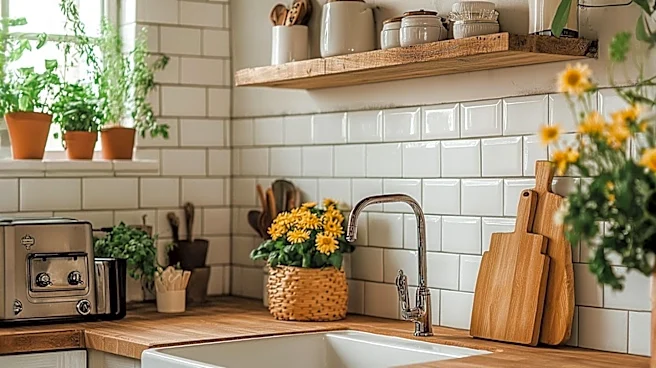
to be pigeonholed into a specific design aesthetic, particularly the 'farmhouse modern' label. She explained that while 'Fixer Upper' showcased her process of bringing her own farmhouse to life, clients began requesting elements like shiplap, white interiors, and brown floors, which became synonymous with her brand during the show's run. Gaines emphasized that her style has evolved beyond that period, and she is deeply invested in the unique stories and histories of each space she designs. She likened her situation to a musician being remembered only for earlier works, despite continued artistic evolution. This isn't the first time Gaines has spoken on the matter; she previously discussed this misconception in a video shared by Magnolia Network in May.
Why It's Important?
This clarification from Joanna Gaines is significant for several reasons within the design and home renovation industries. For consumers, it challenges the perception that her brand, Magnolia, is exclusively tied to one aesthetic, potentially broadening their understanding of her design philosophy and encouraging them to explore diverse styles. For designers and home renovators, it highlights the challenge of evolving one's professional identity beyond a popular trend. Gaines' statement could influence how design trends are perceived and adopted, encouraging more personalized approaches rather than strict adherence to a single style. It also underscores the power of media in shaping public perception of a designer's work and the difficulty of breaking free from such labels once established. Her emphasis on storytelling and history in design could inspire a more thoughtful and individualized approach to home aesthetics.
What's Next?
Moving forward, Joanna Gaines' clarification may lead to a shift in how her work is presented and perceived across her various platforms, including Magnolia Network, her magazine, and future design projects. It is likely that upcoming content will further showcase the breadth of her design interests, moving beyond the 'farmhouse modern' aesthetic to highlight more diverse styles and influences. This could involve new design collaborations, different types of renovation projects on her shows, or editorial features in her magazine that explore a wider range of interior design philosophies. The design community and her audience may also become more attuned to the nuances of her work, potentially leading to a broader appreciation for her evolving artistic vision. This could also encourage other designers to speak out about being typecast by specific trends, fostering a more dynamic and diverse design landscape.
Beyond the Headlines
Beyond the immediate implications for her brand, Gaines' statement touches on broader themes of artistic identity and public perception in the digital age. In an era where personal brands are often defined by easily digestible labels and trends, her effort to clarify her evolving style speaks to the challenge of maintaining creative freedom and authenticity. It highlights how initial successes can inadvertently create restrictive expectations, making it difficult for artists to grow and experiment. This situation also reflects the consumer's role in shaping an artist's public image; while Gaines introduced 'shiplap' to a wider audience, the subsequent demand for it solidified a particular image of her work. Her pushback against this pigeonholing underscores the ongoing tension between commercial success driven by popular trends and the desire for artistic integrity and evolution.