




What's Happening?
Gary and Sue Cox offer overnight stays at Frank Lloyd Wright’s William and Mary Palmer House in Ann Arbor, Michigan, but guests must adhere to strict rules. Before booking, prospective guests complete an intake form detailing their party size and intended
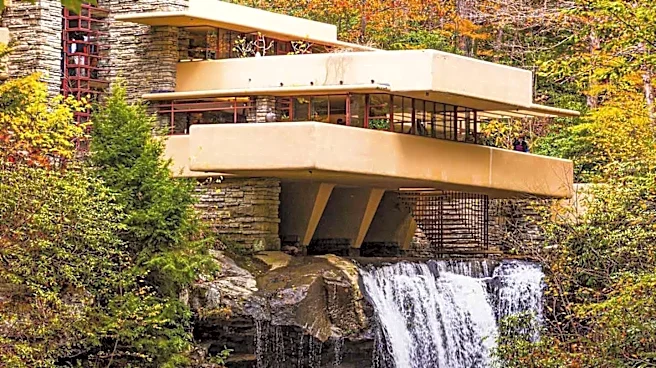
use of the 2,000-square-foot house. Sue Cox conducts a follow-up phone call to outline rules such as no thermostat adjustments, no fires in the fireplace, and no children under six due to the house's sharp angles and hard surfaces. Weekends during football season require additional vetting to prevent large, unruly gatherings. The Coxes, who are the custodians of the property, aim to share the architectural heritage while preserving the landmark. The house, built in the late 1940s, features Wright's 'organic architecture' principles, with a unique equilateral triangle motif and hexagonal elements.
Why It's Important?
The availability of Frank Lloyd Wright's Palmer House for overnight stays offers a unique opportunity for the public to experience a significant piece of American architectural history firsthand, moving beyond traditional museum tours. This initiative highlights the delicate balance between preserving historical landmarks and making them accessible, often through short-term rentals. The strict rules and vetting process underscore the challenges and responsibilities associated with maintaining such properties, which often require specialized care and significant financial investment. This model of preservation through rental can inspire other owners of historic homes to find innovative ways to fund upkeep and share their properties, contributing to the broader appreciation and understanding of architectural heritage. It also demonstrates a growing trend in experiential tourism, where travelers seek immersive cultural and historical experiences.
What's Next?
The Coxes will continue to manage the Palmer House, balancing its preservation with its role as a unique rental property. Their experience, along with that of other Frank Lloyd Wright homeowners like Michael Ditmer and Thomas Papinchak, will likely inform best practices for maintaining and monetizing architectural landmarks. The success of these ventures could encourage more owners of historically significant properties to consider similar rental models, potentially expanding public access to other architectural treasures. Future guests can anticipate a highly curated and controlled experience, designed to protect the integrity of the house while offering an intimate glimpse into Wright's vision. The ongoing challenge will be to find skilled tradespeople for specialized repairs and to manage the financial aspects of maintaining such a unique property.
Beyond the Headlines
The practice of renting out Frank Lloyd Wright homes, while providing public access, also raises deeper questions about the commercialization of historical and artistic legacies. The owners' dedication, often described as a 'labor of love,' highlights the personal commitment required to preserve these structures. The challenges of maintaining original features, such as period furniture and non-modern amenities, force guests to 'go back in time,' offering a unique cultural immersion that contrasts sharply with contemporary living. This experience can foster a greater appreciation for historical design and the evolution of domestic spaces. The careful screening of guests and the emphasis on respectful engagement also reflect a broader societal concern for responsible tourism and the protection of cultural assets from damage or misuse.