


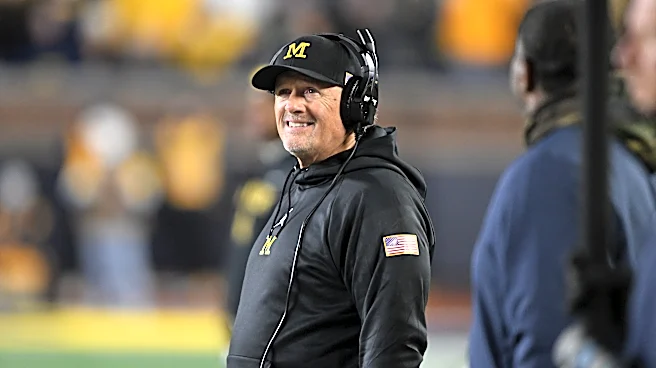


What's Happening?
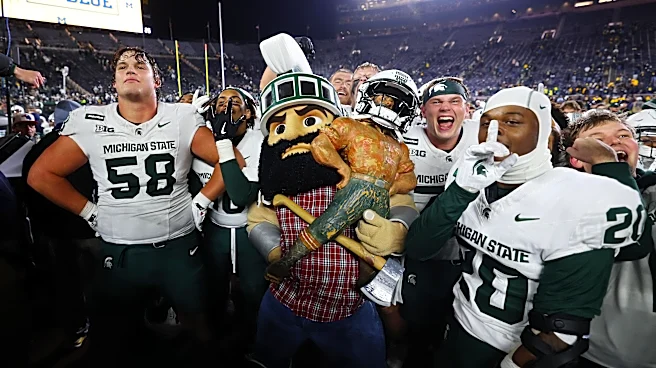
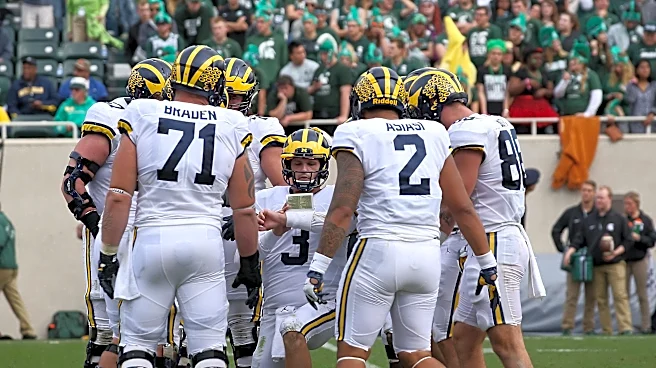
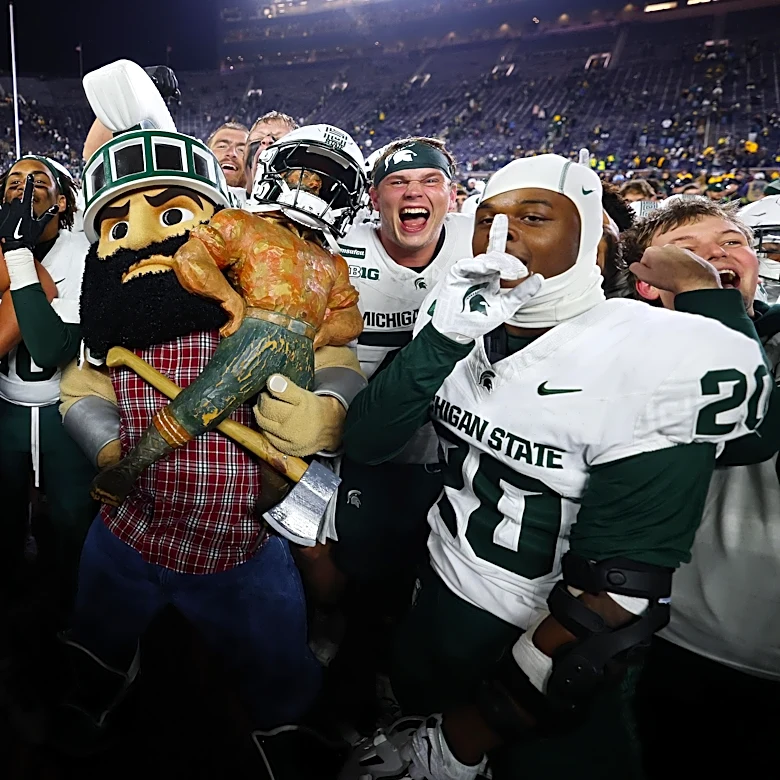
The Michigan Wolverines football team experienced a 15-6 defeat against in-state rival Michigan State on November 8, 2026, marking their first loss to the Spartans since 2021. This defeat dropped Michigan's overall record to 5-4 and their Big Ten record to 2-4.
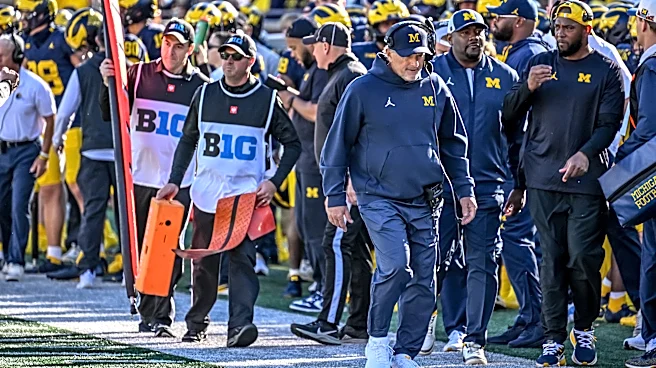
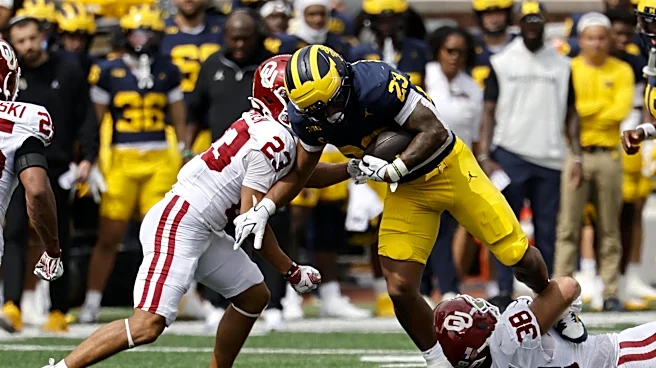
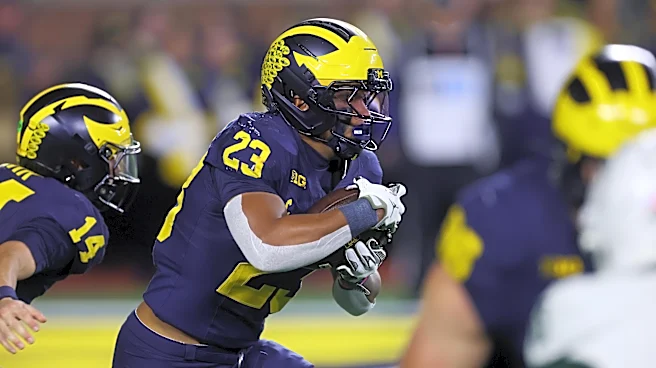
The team's offense struggled significantly, accumulating only 192 total yards and committing four turnovers. Despite a strong defensive performance, it was insufficient to secure a victory. Head coach Kyle Whittingham acknowledged the team's regression, stating that the offense has worsened and is performing at a level comparable to or worse than the 2008 offense under Rich Rodriguez. Whittingham indicated that while he would evaluate the coaching staff at the end of the season, no immediate changes would be made. The team's bowl eligibility is now in jeopardy following this critical loss.
Why It's Important?
This loss is significant for the Michigan Wolverines football program as it highlights a severe decline in offensive performance and places head coach Kyle Whittingham's tenure under intense scrutiny. The Wolverines, who won nine games the previous season with largely the same offensive personnel, are now struggling to secure a winning record in Whittingham's first year. The ineffectiveness of the offense, characterized by a high turnover rate, poor running game, and an inability to block, suggests a coaching issue rather than a player problem, according to analysts. The dissatisfaction among donors, parents, and potentially players could lead to financial pressures on the athletic department, potentially forcing a coaching change sooner than anticipated. The team's inability to perform against a Michigan State team with only two prior wins further exacerbates the concerns about the program's direction and competitiveness within the Big Ten.
What's Next?
Following this critical loss, the Michigan Wolverines face a challenging schedule with upcoming games against Oregon, UCLA, and Ohio State, making their path to bowl eligibility uncertain. Head coach Kyle Whittingham has stated he will evaluate the coaching staff and the team's direction at the end of the season, but he has ruled out immediate changes. The focus for the coaching staff appears to be shifting towards the 2027 recruiting class and utilizing the transfer portal to rebuild, rather than addressing the current season's offensive struggles. The athletic department, currently led by a 'lame duck' Athletic Director, may face increasing pressure from unhappy donors to make significant changes if the team continues to underperform and financial support wanes. The immediate future will likely involve continued struggles on the field and growing speculation about Whittingham's long-term position.
Beyond the Headlines
The struggles of the Michigan Wolverines football team under Kyle Whittingham extend beyond mere on-field performance, touching upon broader implications for collegiate athletic programs. The rapid decline in performance, despite a roster that achieved success just a season prior, raises questions about coaching philosophy, player development, and the adaptation of strategies in a highly competitive conference like the Big Ten. The situation also highlights the immense pressure on head coaches in major college football, where immediate results are often prioritized over long-term development. The potential for donor influence to dictate coaching changes underscores the significant financial stakes involved in college sports. Furthermore, the narrative of a once-successful program struggling to find its footing can impact recruiting efforts and the overall morale of the university's athletic community, potentially leading to a prolonged period of rebuilding if not addressed effectively.