







What's Happening?
Disney's Hollywood Studios in Central Florida has undergone a complete transformation, resulting in the removal of all five of its principal opening-day attractions. The park, which opened on May 1, 1989, as the Disney-MGM Studios Theme Park, was initially
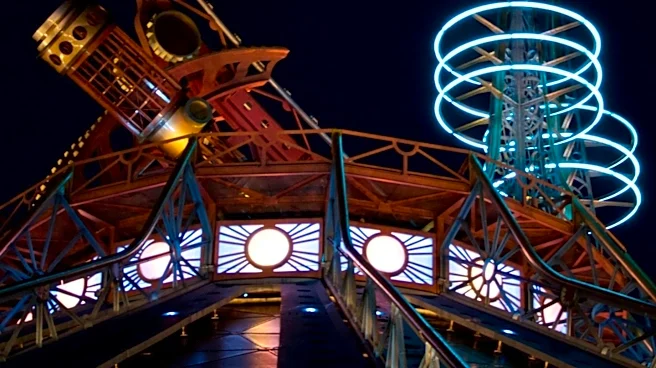
designed to function as both a theme park and a working motion-picture and television production studio. Guests were invited to observe movies being made. Over three decades, shifting consumer preferences, corporate priorities, and the decline of its working-studio role led to the park's evolution. The last of the original attractions, The Great Movie Ride, closed in August 2017, making way for Mickey & Minnie’s Runaway Railway. Other original attractions like The Studio Backlot Tour, The Magic of Disney Animation, SuperStar Television, and The Monster Sound Show have also been replaced by new experiences and themed lands such as Star Wars: Galaxy’s Edge and Toy Story Land.
Why It's Important?
This complete overhaul of Disney's Hollywood Studios signifies a major strategic shift for The Walt Disney Company, moving away from its original concept as a production-focused theme park. The park's initial design, which allowed guests to see animators at work and tour production facilities, reflected a different era of entertainment. The transition to immersive lands centered around popular franchises like Star Wars and Toy Story highlights the company's focus on creating highly themed, character-driven experiences that resonate with contemporary audiences. This change impacts not only the guest experience but also the operational and financial strategies of Disney Parks, emphasizing intellectual property and immersive storytelling as key drivers for attendance and revenue. The transformation also reflects broader industry trends where theme parks prioritize experiential entertainment over behind-the-scenes glimpses of production.
What's Next?
The current trajectory for Disney's Hollywood Studios indicates a continued focus on leveraging major franchises and creating immersive environments. The success of Star Wars: Galaxy’s Edge and Toy Story Land suggests that future developments will likely follow this model, with new attractions and experiences designed to transport guests directly into beloved stories. The park's evolution from a working studio to a destination built around immersive environments and thrill attractions is a clear indicator of Disney's long-term vision for its theme parks. This strategy aims to maintain relevance and appeal to new generations of visitors, ensuring the parks remain competitive in the global entertainment landscape. Future investments will likely concentrate on enhancing these immersive experiences and introducing new technologies to further engage guests.
Beyond the Headlines
The transformation of Disney's Hollywood Studios offers a compelling case study in corporate adaptation and the evolution of entertainment. The park's original concept, rooted in the golden age of Hollywood and the magic of filmmaking, eventually became outdated as the film industry itself changed with the rise of digital animation and new production methods. The decision to dismantle all original attractions, while potentially nostalgic for some, demonstrates Disney's willingness to reinvent its offerings to meet changing consumer demands and technological advancements. This strategic pivot underscores the dynamic nature of the entertainment business, where continuous innovation and alignment with audience preferences are crucial for sustained success. It also highlights the tension between preserving historical elements and embracing future trends in theme park design and guest engagement.