





What's Happening?
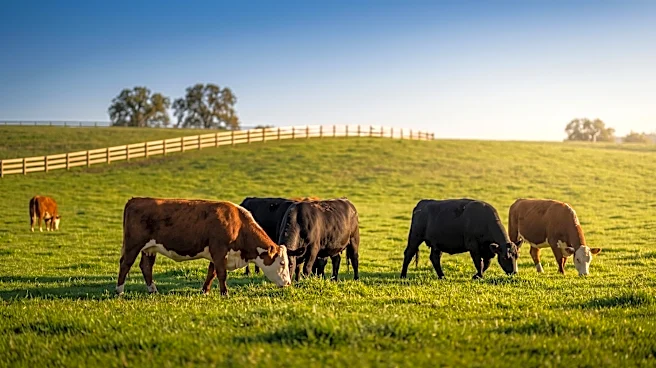
Jackie Moore, owner of Joplin Regional Stockyards in Missouri, one of the largest sale barns in the U.S., maintains a bullish outlook on the cattle market. He believes that if supply and demand are allowed to dictate market prices, the industry will remain
stable. However, Moore does not anticipate widespread herd expansion. He argues against the narrative that beef prices are too high, emphasizing that calves must continue to fetch reasonable prices to incentivize herd growth. Moore highlights that the aging demographic of cattle producers and the need for financial viability are critical factors in attracting the next generation to the industry. Persistent drought conditions and rising input costs are also identified as significant challenges hindering herd expansion.
Why It's Important?
Moore's perspective is crucial for understanding the underlying dynamics of the U.S. cattle market. His emphasis on supply and demand as the primary drivers of price stability suggests a belief in market self-correction, which could influence policy discussions regarding agricultural subsidies or interventions. The resistance to the 'beef is too high' narrative reflects a broader industry concern about consumer perception and its potential impact on demand and profitability for producers. The aging producer population and the financial incentives required to attract younger generations underscore a long-term sustainability challenge for the cattle industry, potentially leading to future supply constraints if not addressed. Furthermore, the mention of drought and rising input costs points to the increasing vulnerability of agricultural sectors to climate change and economic pressures, which could lead to higher beef prices for consumers or reduced profitability for producers.
What's Next?
The cattle industry will likely continue to grapple with the balance between supply, demand, and profitability. Discussions around fair pricing for producers and the economic viability of cattle farming are expected to intensify, especially as producers face rising costs and environmental challenges. Efforts to attract and retain younger generations in agriculture will be critical, potentially leading to new programs or incentives aimed at making farming more financially attractive. The industry may also explore strategies to mitigate the impacts of drought and rising input costs, such as adopting more resilient farming practices or seeking government support. Consumers might see continued fluctuations in beef prices, influenced by these supply-side pressures and the ongoing debate about affordability. The long-term trajectory of herd expansion will depend heavily on these factors and the industry's ability to adapt.
Beyond the Headlines
The challenges faced by the cattle industry, as articulated by Moore, extend beyond immediate market fluctuations to touch upon broader societal and environmental issues. The aging farmer population is a demographic crisis not unique to cattle farming but prevalent across many agricultural sectors in the U.S., raising questions about food security and rural economic vitality. The tension between consumer demand for affordable food and producers' need for profitable prices highlights a fundamental economic dilemma. Moreover, the impact of climate change, manifested through persistent drought, underscores the urgent need for sustainable agricultural practices and robust climate policies. The industry's ability to navigate these complex issues will not only determine its future but also have significant implications for the broader U.S. food system, rural communities, and environmental conservation efforts. This situation calls for a holistic approach involving economic, social, and environmental considerations.