







What's Happening?
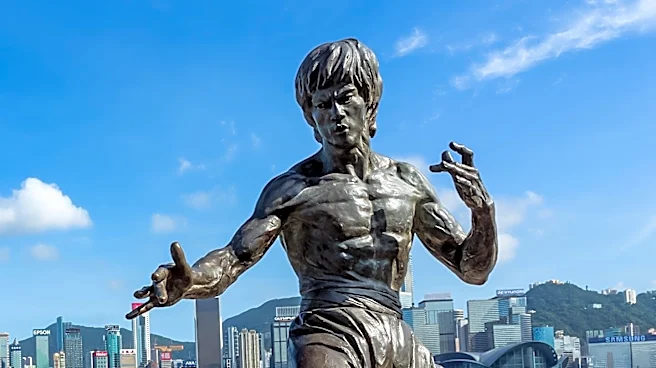
The legendary fight involving Bruce Lee in Oakland has become a significant part of martial arts history. In 1964, Bruce Lee, then relatively unknown, ran a kung fu studio in Oakland with James Lee. The fight, known as the Showdown in Oakland, involved
Bruce Lee and Wong Jack-man, a martial artist from San Francisco. This event reshaped Bruce Lee's martial arts philosophy and contributed to his rise as a Hollywood star. The fight has been the subject of numerous retellings, highlighting its cultural and historical significance.
Why It's Important?
Bruce Lee's fight in Oakland is pivotal in the evolution of martial arts in America, symbolizing the integration of different styles and philosophies. It marked a shift towards more adaptable and fluid martial arts practices, influencing generations of martial artists. The event also underscores Bruce Lee's role in breaking racial barriers and promoting Asian representation in Hollywood. His legacy continues to inspire and shape cultural narratives, reflecting the broader impact of martial arts on American society and entertainment.
Beyond the Headlines
The fight's legacy extends beyond martial arts, influencing cultural perceptions and challenging stereotypes. Bruce Lee's approach to martial arts emphasized adaptability and personal growth, resonating with broader societal changes during the 1960s. His philosophy of 'being like water' has become a metaphor for resilience and flexibility, applicable in various life contexts. The event also highlights the importance of cultural exchange and the role of martial arts in fostering understanding and unity across diverse communities.