

What's Happening?
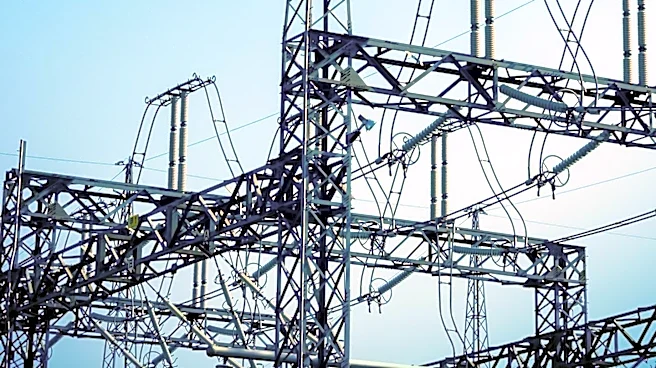
Data centers and grid operators are encountering significant challenges as artificial intelligence (AI) drives a surge in power demands. A notable incident in July 2024 in Northern Virginia saw approximately 1,500 MW of data center load drop off the grid simultaneously
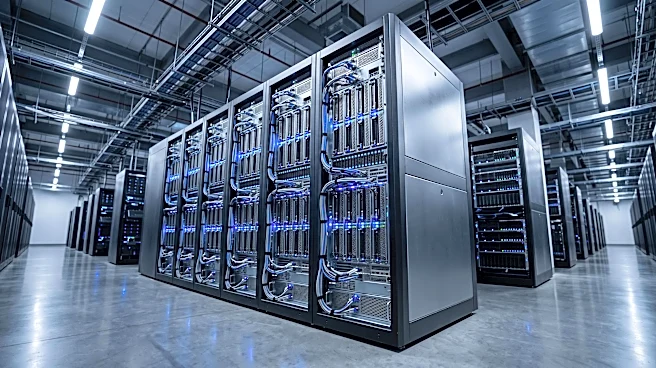
due to a transmission line fault. While the protection systems of both the utility and data centers functioned as designed, the unexpected scale of the load loss required grid operators to intervene to stabilize voltage. This event highlights a widening power gap, with traditional power densities of a few kilowatts per rack being replaced by AI-driven demands ranging from 10 kW to over 500 kW. An IEEE Standards Association Industry Connections group report, 'Review of Industry Efforts and Standards: Data Center Design for IT Load Protection,' identifies key issues including grid disturbance conflicts, protection mismatches, evolving regulatory requirements for interconnection, and a growing standardization gap as data centers are built faster than standards are developed.
Why It's Important?
The escalating power demands from AI-driven data centers pose a critical threat to grid stability and reliability across the U.S. The incident in Northern Virginia demonstrates the potential for large, concentrated data center loads to disrupt the electrical grid, necessitating rapid responses from operators. The report from the IEEE Standards Association underscores the urgent need for updated standards and guidelines to ensure that the rapid expansion of data centers can be accommodated without compromising grid integrity. Without harmonized approaches to load modeling, reporting, and protection, the U.S. faces increased risks of power outages and grid instability, impacting not only data center operations but also broader economic and societal functions reliant on a stable power supply. This situation affects utilities, data center operators, equipment manufacturers, and regulators, all of whom must collaborate to develop solutions.
What's Next?
To address these challenges, the IEEE SA Industry Connections report recommends immediate development in three key areas: creating a standardized AI load model to ensure common understanding between transmission planners and data center operators, developing a load reporting decomposition standard to differentiate data center load in regulatory filings, and agreeing on common terms for workload classification to facilitate flexibility negotiations. Additionally, further standards development is needed for grid interaction and compliance, including coordinating ride-through and control settings, establishing protocols for disturbance-telemetry and flexibility signaling, and securing protection relay messages. The IEEE SA is actively encouraging data center operators, utilities, equipment manufacturers, and regulators to participate in shaping these recommendations to achieve harmony between data centers and the grid.
Beyond the Headlines
The rapid evolution of AI technology is not only transforming industries but also exposing fundamental infrastructure vulnerabilities. The challenges faced by data centers and grid operators highlight a broader societal issue: the need for infrastructure to adapt at the pace of technological innovation. This situation could lead to increased investment in smart grid technologies, energy storage solutions, and more resilient power distribution systems. Furthermore, it may prompt a re-evaluation of energy policy and regulatory frameworks to better integrate high-demand, dynamic loads like AI data centers. The ethical implications of potential grid instability, particularly concerning critical services reliant on data centers, also come into focus, emphasizing the need for robust and proactive solutions to ensure continuous operation and public safety.