






What's Happening?
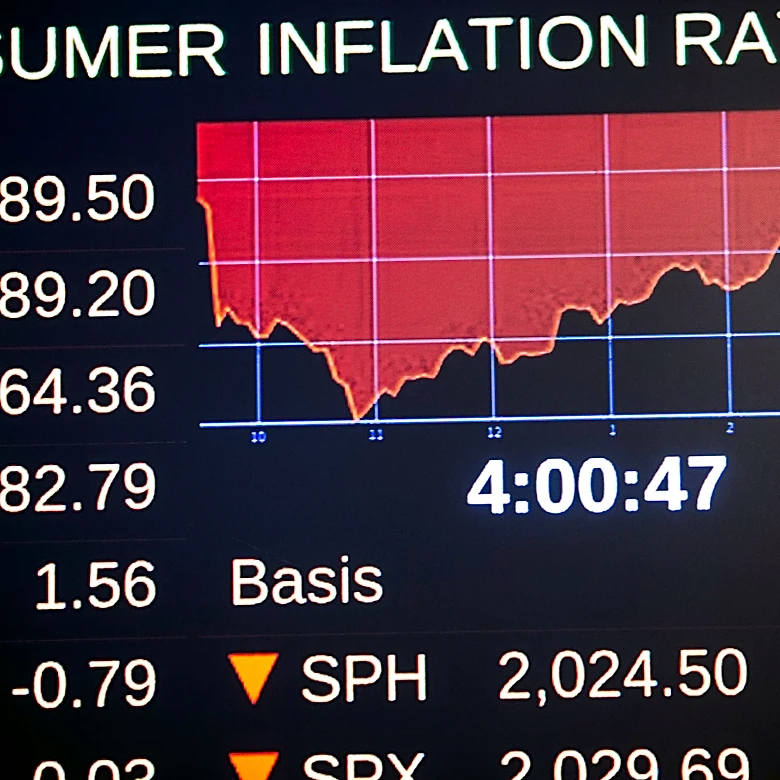
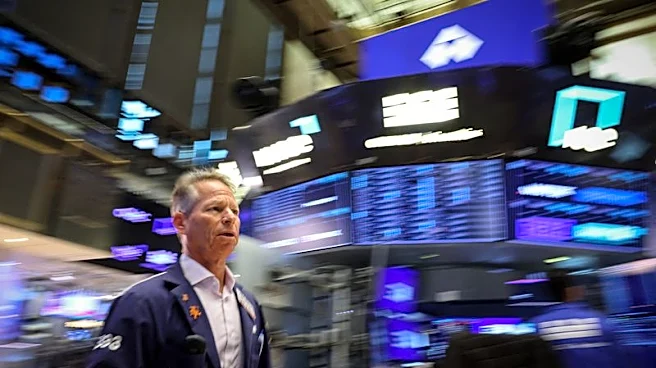
The S&P 500 closed at 7,353.73 on November 5, 2026, recording a substantial drop of 334.89 points, or 4.36%. This performance marks the index's worst single day since April 2025, with a 3.21% decline. The downturn erased gains made post-midterm elections,
primarily driven by a market meltdown led by technology stocks. Despite strong third-quarter earnings growth and robust performance within the technology sector, renewed downside pressure contributed to the significant fall. The estimated Price-to-Earnings (P/E) Ratio for the S&P 500 Index was calculated at 23.15 on the same date. While this P/E ratio is considered fair when compared to the average interval of [20.42, 26.97] over the last five years, the sharp drop in the price-to-forward earnings ratio signals potential economic concerns.
Why It's Important?
The sharp decline in the S&P 500 is a critical indicator for the broader U.S. economy and financial markets. A significant drop, especially one marking the worst day in over a year, can erode investor confidence and signal underlying economic vulnerabilities. The fact that technology stocks led this market meltdown suggests potential concerns within a sector that has often been a driver of growth. A falling price-to-forward earnings ratio is often interpreted as a precursor to a recession, indicating that investors anticipate lower future earnings for companies. This could lead to reduced corporate spending, hiring freezes, and a general slowdown in economic activity. Businesses reliant on market stability for capital raising or investment may face increased challenges, while individual investors with portfolios tied to the S&P 500 could see substantial losses, impacting retirement savings and overall wealth.
What's Next?
Following such a significant market downturn, investors and analysts will closely monitor upcoming economic data, corporate earnings reports, and any statements from the Federal Reserve regarding monetary policy. The market's reaction in the immediate days and weeks will be crucial in determining if this was an isolated event or the beginning of a more sustained bearish trend. Companies may re-evaluate their growth strategies and capital expenditure plans in response to increased market volatility and potential economic headwinds. Policy makers might face pressure to address economic concerns, potentially through fiscal measures or adjustments to interest rates. The performance of technology stocks, which led the recent decline, will be particularly scrutinized as their trajectory often influences broader market sentiment. Further declines could trigger a broader reassessment of market valuations and investment strategies across various sectors.
Beyond the Headlines
The recent S&P 500 drop highlights the inherent volatility and interconnectedness of global financial markets, even in the face of seemingly positive indicators like strong earnings. The market's sensitivity to 'renewed downside pressure' suggests that underlying anxieties, perhaps related to inflation, interest rates, or geopolitical events, continue to influence investor behavior. This event could prompt a shift in investment strategies, with a potential move away from growth stocks, particularly in the technology sector, towards more defensive assets or value stocks. Furthermore, it underscores the psychological aspect of market movements, where sentiment can quickly shift and amplify price changes. The long-term implications could include a re-evaluation of risk tolerance among institutional and retail investors, potentially leading to more cautious investment approaches and a greater emphasis on diversification in portfolios. This could also reignite debates about market regulation and the role of technology in driving market swings.