




What's Happening?
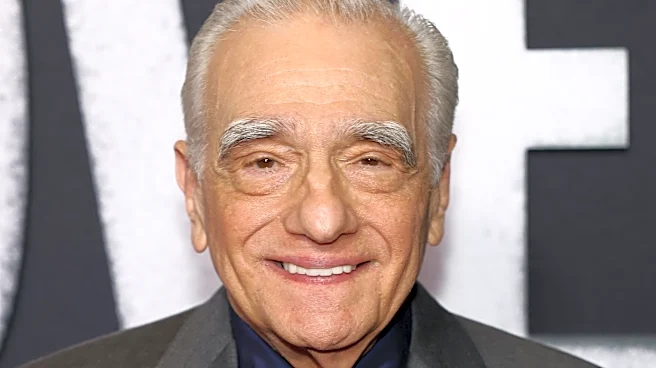
In 1967, acclaimed filmmaker Martin Scorsese directed a six-minute short film titled 'The Big Shave.' This impactful work depicts a man's daily shaving ritual escalating into bloody self-mutilation. The film, which concludes with the explicit mention
'Viet '67,' is widely interpreted as a fierce allegory for the self-destruction of American youth and the nation during the Vietnam War. Scorsese himself acknowledged this conscious political message, stating it was a 'cry of anger against the war.' However, he later revealed that the film also reflected a period of deep personal depression he was experiencing, unrelated to the war. 'The Big Shave' is recognized as an early showcase of Scorsese's distinctive style, featuring violent color contrasts, unconventional music use, rhythmic editing, and a visceral approach to graphic violence, elements that would become hallmarks in his later works like 'Taxi Driver.'
Why It's Important?
This early work by Martin Scorsese is significant for several reasons. Firstly, it provides a critical lens through which to understand the cultural and psychological impact of the Vietnam War on American society, as interpreted by a burgeoning artist. The film's allegorical nature highlights the profound sense of self-inflicted harm and futility that many felt regarding the conflict. Secondly, 'The Big Shave' offers crucial insight into the formative stages of one of America's most influential directors. It demonstrates the early development of Scorsese's signature cinematic techniques and thematic preoccupations, such as violence, psychological turmoil, and societal critique. Understanding this foundational piece helps in appreciating the evolution of his artistic vision and the consistent themes present throughout his extensive filmography, influencing generations of filmmakers and shaping American cinema.
What's Next?
While 'The Big Shave' is a historical piece, its continued analysis by film scholars and enthusiasts ensures its relevance in discussions about war, mental health, and cinematic expression. The film's inclusion in retrospectives or academic studies of Scorsese's work will likely persist, offering new generations insights into the socio-political climate of the late 1960s and the origins of a master filmmaker's style. Its themes of self-destruction and societal critique remain pertinent, potentially sparking contemporary discussions on similar issues in modern contexts. The film serves as a testament to the enduring power of short-form cinema to convey profound messages and establish an artist's voice.
Beyond the Headlines
Beyond its immediate political and personal interpretations, 'The Big Shave' delves into deeper psychological and ethical implications. The act of self-mutilation, presented without explicit pain or hesitation, can be seen as a chilling commentary on the desensitization to violence and suffering, both on a personal and national scale. The film's stark visual style and unsettling narrative challenge viewers to confront uncomfortable truths about human nature and societal complicity. It raises questions about the nature of protest, the expression of despair, and the ways in which personal struggles can intertwine with broader historical events. This early work foreshadows Scorsese's career-long exploration of guilt, masculinity, and the darker aspects of the human psyche, making it a foundational text for understanding his artistic philosophy.